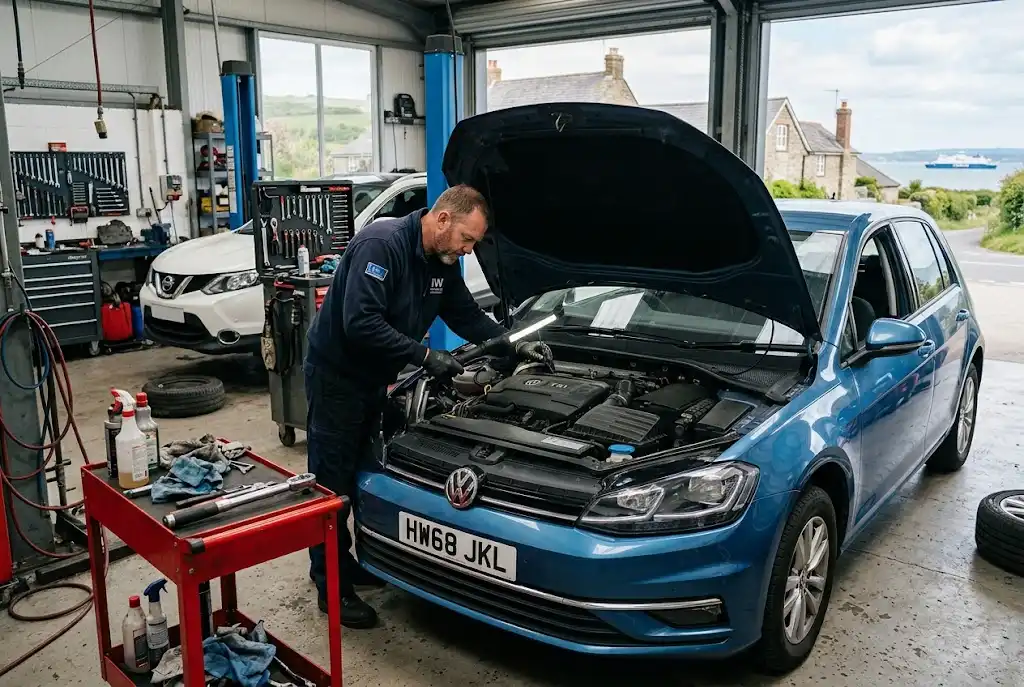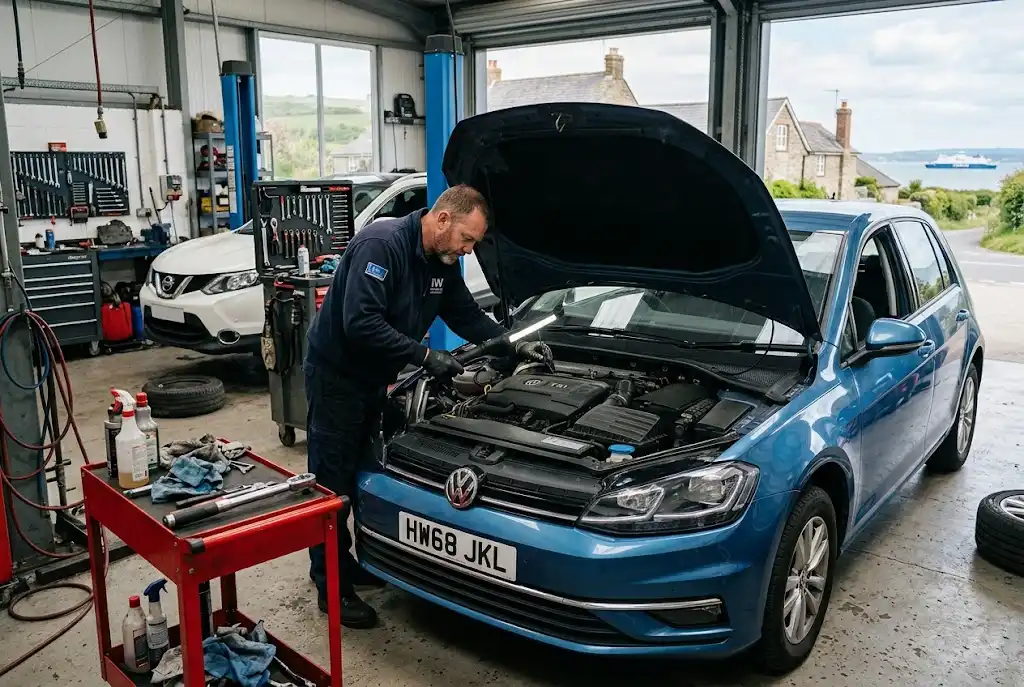


Car service plans for island drivers work on the same idea as anywhere else: spread the cost of routine maintenance across the year instead of facing a large garage bill all at once. On the Isle of Wight, though, the details matter more. Garage choice is smaller, a trip to the mainland is a ferry journey rather than a short drive, and family vehicles often work hard on short island trips. This guide explains how maintenance plans work for island motorists, what they usually cover, what to check before signing up, and how to decide whether a plan suits your car and your driving.
What Are Car Service Plans?
A car service plan is an agreement under which you pay a regular amount, usually monthly, in return for scheduled servicing over a set period. Instead of paying the full cost when your car is due its annual service, you spread it across the year. Plans are offered by franchised dealers, independent garage groups, motoring organisations and third-party providers. The plan typically covers the servicing itself, and may include extras depending on the level you choose.
The basic logic is simple. Servicing is predictable: most cars need an annual service or an interim service, plus consumables such as oil, filters and fluids. A plan collects money towards those known costs in advance, so the bill at the garage feels smaller or disappears entirely. What varies widely is exactly what is included, which garages you can use, and what happens with wear-and-tear items such as brakes, tyres and batteries, which are often excluded or covered only up to a limit.
What Do Car Service Plans Usually Cover?
Coverage differs from plan to plan, so the details matter more than the headline. A typical mid-level plan covers the annual service itself, including oil, oil filter, air filter and fluid checks, plus a general inspection. Higher-level plans may add items such as pollen filters, spark plugs on petrol cars, brake fluid changes and air conditioning servicing. Some plans bundle the MOT test as well, although the MOT is a legal inspection rather than a service, and it is worth confirming whether the test fee itself is included or only the work around it.
What is usually not covered is just as important. Tyres, brakes, clutches, batteries and suspension parts are wear-and-tear items, and most plans either exclude them or cap the contribution. Accident repairs and bodywork are almost never included. If a plan sounds comprehensive, read the exclusions carefully: a plan that covers servicing but leaves you paying separately for every worn part may save less than it appears to. For a sense of what servicing alone can cost on the island, our guide to car service costs sets out the main factors that drive garage bills.
Why Island Driving Changes the Calculation
Island motoring has its own character, and it affects how service plans work in practice. Many island journeys are short: school runs, shopping trips and commutes within a small area. Short journeys mean engines often run cold, which can increase wear and make regular oil changes more important. Coastal air and rural lanes add their own demands, from salt exposure to uneven road surfaces. None of this makes a service plan essential, but it does mean island cars often benefit from sticking closely to their service schedule.
Garage access is the other island factor. The island has good local garages, but the choice is naturally smaller than on the mainland, and a plan that ties you to a single provider or a mainland network may be less convenient than it looks. Before signing up, check how many participating garages are near your home and whether you can use a garage you already trust. Our guide to auto services on the Isle of Wight and our overview of island motoring both cover how local garage choice works in practice. If your car ever needs a mainland specialist, remember that the ferry crossing itself is part of the cost and time of the trip.
Are Car Service Plans Worth It for Island Drivers?
Whether a plan saves money depends on three things: the monthly amount, what is included, and how much servicing your car actually needs. A plan is most likely to work in your favour if your car is due regular servicing, you keep up with the schedule, and the plan covers the items your car genuinely needs at its age and mileage. It is least likely to save money if you drive very few miles, if your car is new and still under a manufacturer service package, or if you sell the car partway through the plan term.
Do the comparison honestly. Add up twelve months of plan payments and compare that total with the price of the same servicing paid for directly, using quotes from island garages you would actually use. Remember that car servicing prices vary by car make, engine type and garage, so a plan that looks cheap for a small hatchback may be poor value for a larger family car, and vice versa. Also consider the MOT: if your plan includes the test, factor that in, but remember that MOT and service are different things, and our guide to MOT and service on the Isle of Wight explains how they fit together.
There is a non-financial benefit worth weighing too. A plan encourages you to keep servicing on schedule, because the cost is already covered. Drivers who might otherwise delay a service to save money in a tight month are more likely to keep their car maintained, and regular vehicle maintenance protects reliability, safety and resale value. For family vehicles that are used every day, that discipline alone can justify a plan, even if the pure cash saving is modest.
What to Check Before You Sign Up
Before committing to any plan, work through a short checklist. First, confirm exactly what is included and what is excluded, in writing, including wear-and-tear limits and any cap on parts. Second, check which garages you can use on the island and whether you can change garage if you move. Third, ask what happens if you sell the car: can the plan transfer to a new owner, transfer to your next car, or be cancelled, and is there a fee? Fourth, check the cancellation terms and whether you owe anything if you cancel early after having work done. Fifth, confirm whether the MOT test fee is included and whether a failed MOT leads to repair costs that sit outside the plan.
It is also worth asking how the plan handles servicing intervals. Some cars use fixed annual intervals, others use variable intervals based on driving conditions, and a plan should match your car’s actual schedule rather than forcing extra visits. A good provider will explain the schedule clearly and match it to your car, not to a generic template. If your car spends much of its time on short island trips, ask whether the provider recommends shorter intervals, and whether the plan pricing reflects that.
Pay As You Go Versus a Service Plan on the Island
Paying as you go has one clear advantage: you only pay for work your car actually needs, when it needs it, at a garage of your choice. If you drive little, own a reliable car with modest servicing needs, or prefer to shop around for each service, pay as you go may well be cheaper. It also avoids commitment: you are not tied to a provider or a monthly payment if your circumstances change.
A plan has the opposite strengths. It smooths costs, encourages regular servicing, and removes the sting of a large annual bill. It suits drivers who value budgeting certainty, who drive enough to use the full schedule, and who are happy with the provider’s garage network. Some island drivers split the difference: they keep a simple savings habit for servicing rather than a formal plan, setting aside a fixed amount each month so the money is there when the service falls due, while keeping full freedom over where the car goes.
Whichever route you choose, the underlying principle is the same, and it is the same one behind good mobile auto service and local garage care generally: regular, scheduled maintenance costs less over a car’s life than neglected servicing followed by repairs. A plan is a budgeting tool for that maintenance, not a substitute for it, and the best plan is the one whose coverage matches your car’s real needs.
Car Service Plans: The Bottom Line for Island Drivers
Car service plans can be a sensible choice for island drivers who cover regular miles, want predictable motoring costs and are happy with the provider’s garage network. They are less compelling for very low-mileage drivers, for cars already covered by a manufacturer package, or for anyone who values complete freedom over where their car is serviced. The key is to compare like with like: total plan cost against the real price of the same servicing from island garages, with exclusions and cancellation terms read before you sign.
Take the time to get two or three quotes, check the garage network near you, and confirm what happens if you sell the car. Done carefully, a service plan removes one of the least pleasant surprises of car ownership. Done hastily, it can lock you into paying for coverage you barely use. For most island drivers, the right answer is not the cheapest plan or the most expensive one, but the plan whose coverage honestly matches the car they drive and the miles they cover.