
Buying used cars can be a practical way for island motorists to find a vehicle that fits their budget and everyday needs. Whether you are looking for a family car, a reliable commuter vehicle or something suitable for regular ferry travel, buying second-hand requires careful research. The advertised price is only one part of the decision, and condition, history, running costs and seller reliability all deserve attention.
For Isle of Wight buyers, there is another consideration: the local market may offer fewer examples of a particular make or model than a large mainland market. That can make online research and comparison especially useful. At the same time, travelling to the mainland to inspect a vehicle adds time and ferry costs, so preparation before making the journey is important.
Why Used Cars Can Suit Island Motorists
A second-hand vehicle can offer access to a wider range of models at different price points. Buyers can compare older, newer, higher-mileage and lower-mileage examples according to their own requirements.
For families, the priority might be passenger space, boot capacity and dependable running costs. A commuter may focus more heavily on fuel economy, mileage and reliability. Someone who regularly travels between the island and mainland may also want a vehicle that is comfortable for longer journeys.
The best choice therefore depends on how the car will actually be used rather than simply how attractive it appears in an advertisement.
Set a Realistic Budget Before Looking at Used Cars
It is easy to become focused on the advertised purchase price when searching for a vehicle. A more useful approach is to establish a complete buying budget before contacting sellers.
Consider how much you can comfortably spend on the vehicle itself, then leave room for immediate expenses. A recently purchased car may need servicing, tyres, brake work or other maintenance even when it appears to be in reasonable condition.
Also account for insurance, fuel, vehicle tax where applicable, MOT costs, parking and ferry travel. These expenses can make a meaningful difference to the affordability of a vehicle over several years.
If you intend to finance the purchase, the monthly repayment should also be considered alongside these ownership expenses. Our related guide to car finance for island residents explains why the monthly payment should not be considered in isolation.
Compare Second-Hand Vehicles Properly
When comparing second-hand vehicles, avoid judging cars solely by age or mileage. A well-maintained higher-mileage vehicle can sometimes be a more sensible purchase than a lower-mileage example with a poor maintenance history.
Look at several vehicles of the same model and similar age. Compare their mileage, specification, service records, MOT history, condition and asking prices.
Useful questions include:
- How many miles has the vehicle covered?
- Does it have a documented service history?
- When was the last service completed?
- How long is left on the MOT?
- Are there advisories on recent MOT records?
- How many previous keepers has it had?
- Are the tyres and brakes in good condition?
- Has the vehicle had any significant repairs?
- Are there outstanding finance or ownership concerns?
- Why is the seller selling the vehicle?
These questions can help you build a more complete picture before making an offer.
Check the MOT and Vehicle History
Vehicle history should be an essential part of the buying process. GOV.UK advises buyers to check the vehicle’s details against DVLA information, review its MOT status and history, check for relevant safety recalls and inspect the V5C log book before completing a purchase.
Look for patterns in MOT records rather than focusing on a single test. Repeated advisories or significant changes in recorded mileage may warrant further investigation.
The seller should also be able to provide the relevant vehicle documentation. If important details in the advertisement do not match the paperwork or official records, ask for clarification before proceeding.
Buying From Local Dealerships
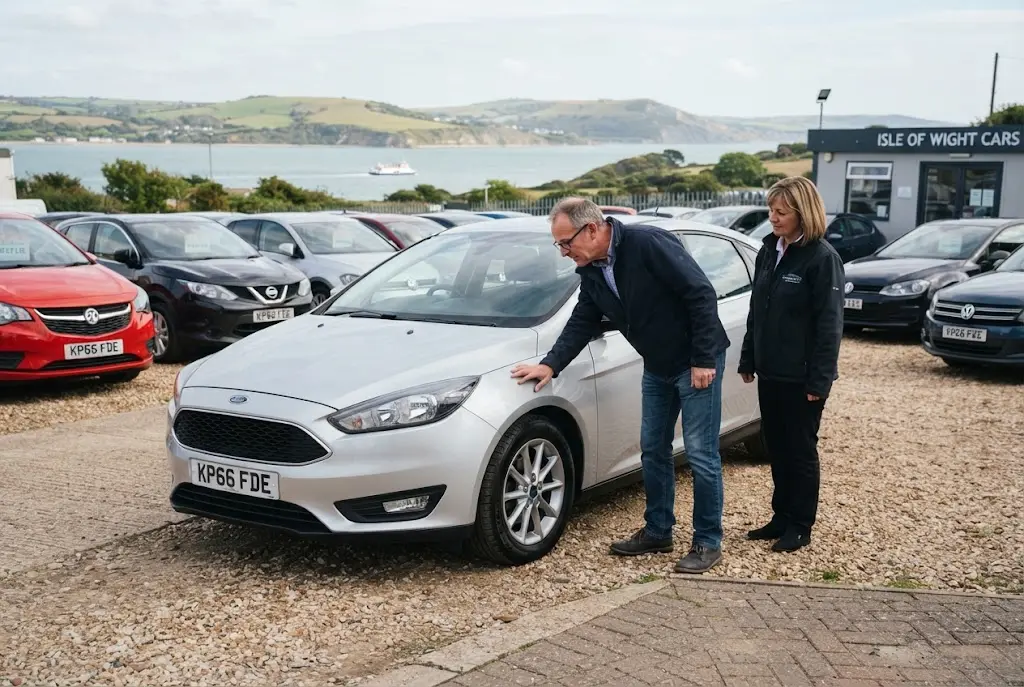
Local dealerships can be attractive to island buyers because they make viewing and test-driving vehicles more convenient. You may also find it easier to return to the same business if you have questions after the purchase.
When visiting a dealership, take your time inspecting the vehicle. Do not assume that a professional-looking forecourt means every car will be suitable for you.
Ask about the vehicle’s service history, previous use, warranty arrangements and any work completed before sale. If the dealership makes specific claims about the vehicle, make sure you understand exactly what is being offered.
Buying locally can also reduce the practical inconvenience of travelling to the mainland, although buyers should still compare local prices with the wider market before deciding.
Buying From Private Sellers
Private sellers may offer vehicles at different prices from dealerships, but buyers should take particular care when assessing the car and the person selling it.
Arrange to view the vehicle in suitable circumstances and check that the seller’s details are consistent with the vehicle documentation. Ask to see the V5C and make sure the vehicle identification details match.
Do not feel pressured into paying a deposit or completing a purchase simply because the seller says another buyer is interested. A genuine opportunity should still allow you enough time to carry out reasonable checks.
GOV.UK specifically recommends checking the vehicle before buying it, including the registration details, MOT history and V5C documentation.
Inspect the Vehicle in Person
Photographs can make a vehicle look better than it does in person. Whenever possible, inspect the car carefully before agreeing to buy it.
Check the bodywork for dents, scratches, mismatched paint and signs of previous repairs. Look at the condition of the wheels and tyres, and inspect the interior for excessive wear that might be inconsistent with the advertised mileage.
Pay attention to warning lights when the engine is started. Test basic equipment such as lights, windows, climate controls, infotainment and other features that are important to you.
A test drive should also form part of the process where appropriate. Listen for unusual noises and pay attention to steering, braking, clutch operation and general vehicle behaviour.
Pay Attention to Tyres and Mechanical Condition
Tyres are an easy area to overlook when focusing on the bodywork and interior. However, replacing several tyres soon after buying a car can create an unexpected expense.
Check tread condition, visible damage and signs of uneven wear. If you notice something concerning, ask the seller about it and consider having the vehicle inspected professionally.
This is particularly relevant for island motorists who regularly use coastal and rural roads. Our guide to tyre services and coastal road safety explains why tyre condition and routine checks matter when driving in changing UK road conditions.
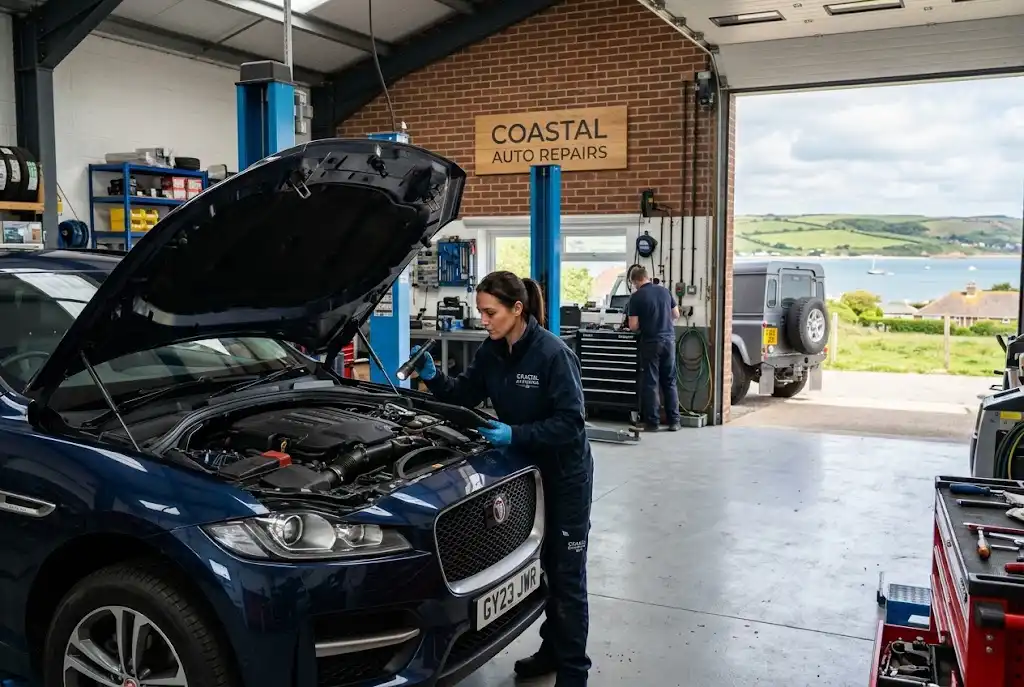
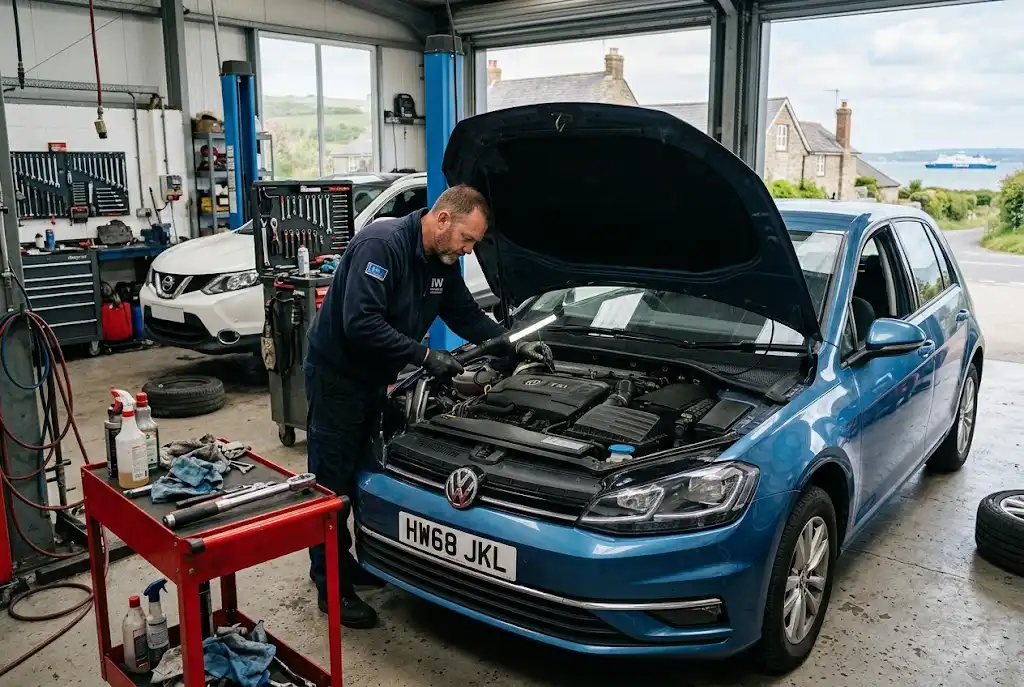
Also consider the condition of brakes, suspension and other components. A professional inspection can be worthwhile when purchasing an older or higher-value vehicle.
Consider Mainland Used Cars
Searching beyond the island can significantly increase your choice. Online vehicle marketplaces allow buyers to compare vehicles from mainland dealerships and sellers before deciding whether a journey is worthwhile.
Our guide to AutoTrader UK and island car buying covers the practical issues involved in searching wider markets, including comparing listings, checking sellers and accounting for ferry travel.
Before travelling, contact the seller and confirm that the car is still available. Ask specific questions about its condition and request additional photographs if important areas are unclear.
There is little value in spending money on a ferry journey to inspect a car that does not match the description.
Calculate the Cost of Bringing a Car From the Mainland
A mainland vehicle may appear cheaper than a similar local example, but the purchase price does not tell the complete story.
Calculate the likely cost of travelling to inspect the car, returning with the vehicle, fuel, parking and any accommodation that might be necessary. If the car requires immediate repairs, include those costs as well.
After adding these expenses, compare the total with similar vehicles available locally. Sometimes the convenience of buying from a local seller may justify a slightly higher purchase price.
In other cases, a mainland vehicle may still offer better overall value, particularly if it has better condition, stronger history or a specification that is difficult to find locally.
Think About Vehicle Ownership, Not Just the Purchase
Choosing among used cars should involve thinking about the years that follow the purchase. Fuel consumption, insurance group, servicing requirements, tyre costs and likely repairs can all affect the real cost of ownership.
An older luxury vehicle, for example, may have an attractive purchase price but potentially higher maintenance costs than a simpler mainstream model. Similarly, a large vehicle may offer excellent practicality while consuming more fuel than you need for everyday journeys.
Consider your normal driving pattern and choose a vehicle that fits it.
When a Vehicle Inspection Is Worthwhile
An independent inspection can be particularly useful when buying privately, purchasing an older vehicle or travelling a significant distance to view a car.
An experienced inspector may identify mechanical or structural concerns that are difficult for an ordinary buyer to spot. The cost of an inspection should be considered against the potential financial consequences of buying a vehicle with a serious hidden problem.
If a seller refuses a reasonable inspection without providing a convincing explanation, consider whether the purchase is worth the risk.
Do Not Rush Into a Used Car Purchase
Buying a vehicle can create pressure because good examples may sell quickly. However, rushing can lead to mistakes that are much more expensive than missing one listing.
Have a clear list of requirements before you begin. Decide which features are essential and which are simply desirable. This makes it easier to reject vehicles that look attractive but do not meet your practical needs.
Keep several options in consideration where possible. If one vehicle fails an inspection or turns out to be overpriced, you can move on without abandoning your entire search.
What to Do After Buying
Once you purchase a vehicle, complete the necessary ownership and running requirements promptly. GOV.UK states that a used vehicle should be taxed before it is used on the road, and the seller normally handles registration details with DVLA or provides the necessary new-keeper documentation.
Arrange insurance before driving the vehicle and keep all purchase and maintenance documentation. If the car is due a service or requires maintenance, booking the work soon after purchase can help establish a reliable baseline for future ownership.
Final Thoughts
Buying used cars can be a sensible option for island motorists, but the strongest purchase is rarely the vehicle with the lowest advertised price. Condition, history, servicing, tyres, seller reliability and future ownership expenses all matter.
Local dealerships can provide convenience, while private sellers and mainland listings can broaden your choice. Whichever route you take, check the vehicle carefully, verify its documentation and consider an independent inspection when appropriate.
For Isle of Wight buyers, ferry travel adds another practical consideration when shopping beyond the island. Planning that journey carefully and comparing the total cost of each option can help you avoid paying more than expected.
Ultimately, a good second-hand vehicle should fit both your driving needs and your household budget. Taking time to research before committing can make the buying process more straightforward and help you enjoy more dependable motoring after the purchase.