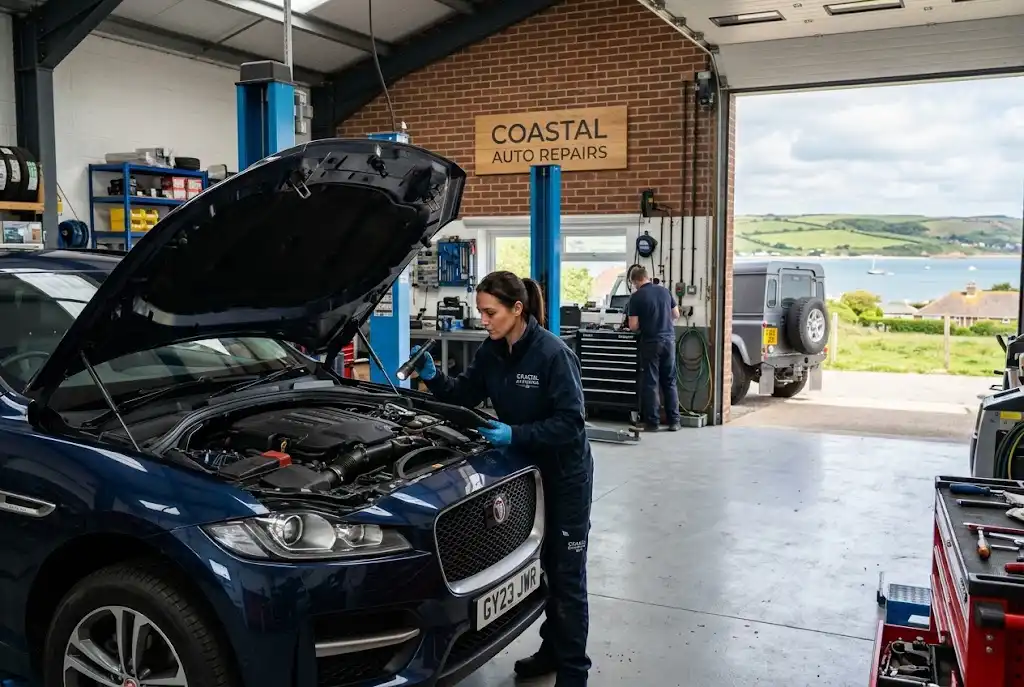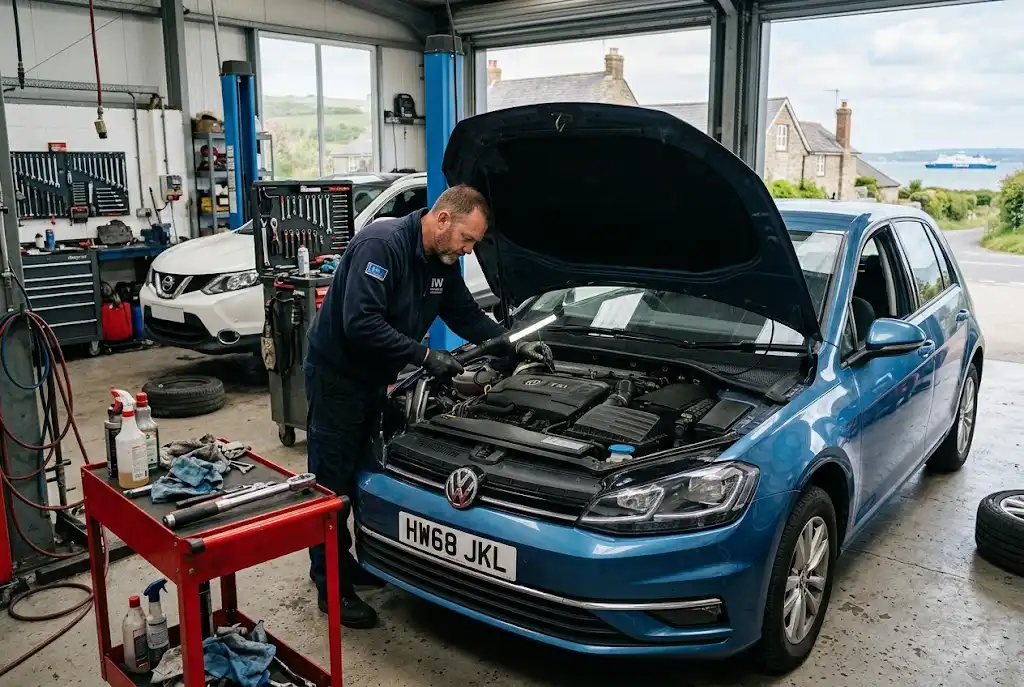

For drivers who depend on a car for commuting, family journeys, shopping and travel around the island, missing an MOT deadline or postponing routine maintenance can create unnecessary problems. Fortunately, the process is straightforward when you understand when testing is required, how authorised MOT centres operate and what should be considered before booking a garage.
What Does an MOT and Service Appointment Involve?
An MOT and a vehicle service are related but separate activities. The MOT is a statutory test designed to assess specific parts of a vehicle against prescribed standards. A service is a maintenance process that can involve inspections, fluid checks, filter replacement, lubrication, diagnostic checks and other work depending on the vehicle and its service schedule.
A car can therefore have a valid MOT while still requiring a service. Equally, having a vehicle serviced does not replace the legal requirement for an MOT when the vehicle is due for one.
When booking both around the same time, ask the garage to explain which work relates to the MOT and which work forms part of the service. This makes invoices easier to understand and helps prevent confusion about what has actually been carried out.
When Do Isle of Wight Cars Need an MOT?
For most cars, the first MOT is required three years after registration. After that, the vehicle generally needs an MOT every year. The Driver and Vehicle Standards Agency (DVSA) administers the MOT service and sets requirements for authorised testing stations and testers.
Drivers should check the exact MOT expiry date for their vehicle rather than relying on memory. GOV.UK provides official MOT information, including the ability to check MOT history and when the next test is due.
Planning ahead is particularly useful for island motorists who rely on their vehicle every day. Booking close to the expiry date can leave less flexibility if the vehicle needs repairs before it can legally be driven again.
How Local MOT Centres Work
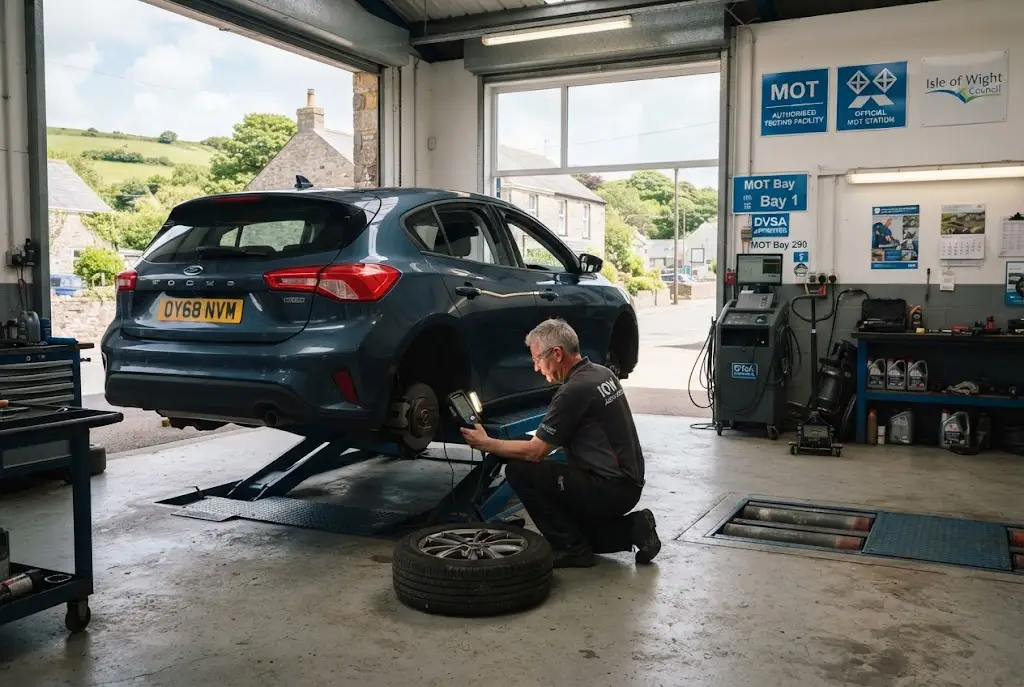
Local MOT centres are not simply ordinary garages offering an informal inspection. An MOT testing station must be authorised to conduct statutory testing, and testers must be approved by DVSA for the vehicle classes they test. DVSA also maintains information about authorised vehicle testing stations to help the public locate testing facilities.
When choosing a local testing centre, therefore, motorists should make sure they are booking an actual MOT test rather than a general vehicle inspection. If you also want routine maintenance completed, ask whether the same garage offers servicing alongside its MOT facility.
A combined booking can sometimes be convenient because the garage can identify potential maintenance issues during the same visit. However, any additional repair work should be discussed with you before it is authorised.
MOT Testing and Road Safety
The purpose of an MOT is closely connected with road safety. The test examines specified components and systems to determine whether the vehicle meets the required standards. It is not intended to provide a complete mechanical health assessment of every part of the car.
This distinction is important. Passing an MOT does not mean that a vehicle will remain mechanically problem-free for the following year. Components can wear out after a test, and some maintenance items are outside the scope of the statutory MOT test.
Regular servicing therefore remains an important part of vehicle ownership. Drivers should follow the maintenance schedule appropriate to their vehicle and respond to warning lights, unusual noises, changes in handling or other signs of a developing problem.
What Is Checked During an MOT?
The precise inspection depends on the vehicle class, but Class 4 covers many ordinary cars, passenger vehicles, motor caravans and other vehicles within the relevant weight and seating categories. The official MOT testing guide defines the vehicle classes and applicable testing requirements.
For an ordinary car, areas covered by MOT testing can include items associated with:
- Braking systems
- Steering and suspension
- Tyres and wheels
- Lights and electrical equipment
- Visibility
- Bodywork and vehicle structure
- Registration plates
- Emissions and exhaust-related components
- Seat belts and other safety-related equipment
The test is carried out according to defined testing standards rather than according to the individual preferences of a garage. This helps create a consistent legal framework for vehicle testing throughout Great Britain.
Why Combine MOT Planning With Routine Servicing?
Although an MOT and a service have different purposes, coordinating them can make vehicle maintenance easier to manage. If the car is already visiting a garage for its annual inspection, it can be convenient to arrange appropriate servicing around the same period.
However, motorists should still follow the vehicle manufacturer’s recommended service intervals. Those intervals may be based on mileage, time or a combination of both. Some vehicles may require maintenance more frequently than once a year, particularly when they cover high annual mileage.
Keeping a separate record of the MOT and service history is useful as well. A service invoice can show maintenance that an MOT certificate does not, while the MOT history provides information about statutory testing and previous results.
What Happens If a Vehicle Fails Its MOT?
If a vehicle does not meet the required standard, the tester records the relevant defects and the vehicle may need repairs before it can pass a subsequent test. The next steps depend on the severity and nature of the defects and on where the repair work is carried out.
Before agreeing to repairs, ask the garage to explain which items caused the failure and which additional items are recommendations rather than requirements for the test result. A written estimate can help you understand the potential repair expenses.
For more complex faults, diagnostic work may be necessary before the final repair price can be established. This is one reason why motorists should not assume that the cost of an MOT is the same as the total cost of getting a vehicle back into compliant condition.
Choosing a Community Garage on the Isle of Wight
For island drivers, a community garage can provide a convenient local option for routine servicing, inspections and repairs. When comparing garages, look beyond the advertised MOT price and consider whether the business has the facilities and expertise required for your vehicle.
Useful questions include:
- Is the garage an authorised MOT testing station?
- Does it test the vehicle class applicable to your car?
- Can servicing be completed during the same visit?
- Will you receive an itemised estimate for additional repairs?
- Does the garage have suitable diagnostic equipment?
- How does it handle customer approval for additional work?
These questions can help motorists find a service provider that matches both their vehicle requirements and their maintenance expectations.
Island Compliance and Local Motoring Needs
Island motorists often use their vehicles across a mixture of urban roads, rural routes and coastal areas. Regular vehicle checks can therefore be useful beyond the minimum legal requirements. Tyre condition, brakes, lights, windscreen visibility and suspension are all relevant to everyday driving, regardless of whether an MOT is immediately due.
Drivers who regularly travel between the Isle of Wight and the mainland should also consider how a vehicle problem could affect their wider travel plans. A fault that develops shortly before a ferry journey can create additional disruption, particularly if the vehicle needs specialist attention.
This is another reason to avoid treating the MOT as the only maintenance event on the calendar. Routine servicing and timely inspections can help motorists maintain a clearer picture of their vehicle’s condition.
MOT and Service Costs: What Should You Budget For?
The cost of an MOT is separate from the cost of servicing and repairs. GOV.UK publishes the maximum statutory MOT test fees for different vehicle types, while individual authorised testing stations may charge less than the applicable maximum. The official fee information should be checked when planning current costs.
Servicing prices vary according to the vehicle, service type, parts, labour and additional work required. If you’re comparing garages, it is useful to request like-for-like quotations and confirm what is included before booking.
Our guide to car service cost on the Isle of Wight provides more detail on comparing garage quotations, maintenance pricing and the wider ownership expenses that island motorists may need to consider.
How to Prepare Your Vehicle Before the Test
A few basic checks can help you identify obvious issues before an MOT appointment. Check that the lights appear to work, tyres are appropriately inflated and have sufficient tread, the windscreen and mirrors are in good condition, and warning lights are not indicating a problem.
These checks do not replace professional testing. They simply give the driver an opportunity to identify straightforward issues that may need attention.
It is also sensible to remove unnecessary items from the vehicle and make sure the tester can access the relevant areas of the car. If you have noticed a particular noise, warning light or handling issue, tell the garage when you book the appointment.
When an MOT Is Due, Don’t Wait Until the Last Minute
Booking an MOT early can provide more flexibility if repairs are required. This can be particularly useful for drivers whose vehicle is essential for work, school runs, family commitments or regular travel.
If you know the vehicle will soon require both statutory testing and routine maintenance, planning the appointments together can also make your motoring schedule easier to manage. Just remember that an MOT certificate and a service record represent different aspects of vehicle care.
Keeping Your Vehicle Ready for Island Driving
For Isle of Wight motorists, an MOT and service should be viewed as part of an ongoing maintenance routine rather than a once-a-year obligation. The MOT provides a legally required assessment against defined testing standards, while servicing helps maintain the vehicle between tests.
Choosing an appropriate local MOT centre, understanding what the test covers and keeping up with manufacturer-recommended servicing can make vehicle ownership more predictable. Drivers can then deal with maintenance issues before they become more disruptive and keep better control of their motoring schedule.
For drivers looking beyond annual testing, the wider Auto Services cluster will also cover auto inspection services, including broader vehicle condition and safety checks, as well as hybrid services for drivers considering newer powertrain technologies.