
Wheel alignment is an important part of vehicle maintenance, particularly for motorists who regularly drive on rural roads, uneven surfaces and varied routes across the Isle of Wight. Correct alignment helps the wheels point in the intended direction and can support predictable handling, even tyre wear and overall vehicle stability.
Island drivers can encounter a mixture of town streets, narrow country lanes, coastal routes and roads affected by potholes or other surface defects. A significant impact does not always produce an obvious problem immediately, which means changes in steering behaviour or tyre wear should not be ignored.
Understanding the difference between wheel alignment and wheel balancing, recognising possible signs of alignment problems and knowing when to visit a garage can help motorists protect their tyres and maintain a safer, more comfortable driving experience.
What Is Wheel Alignment?
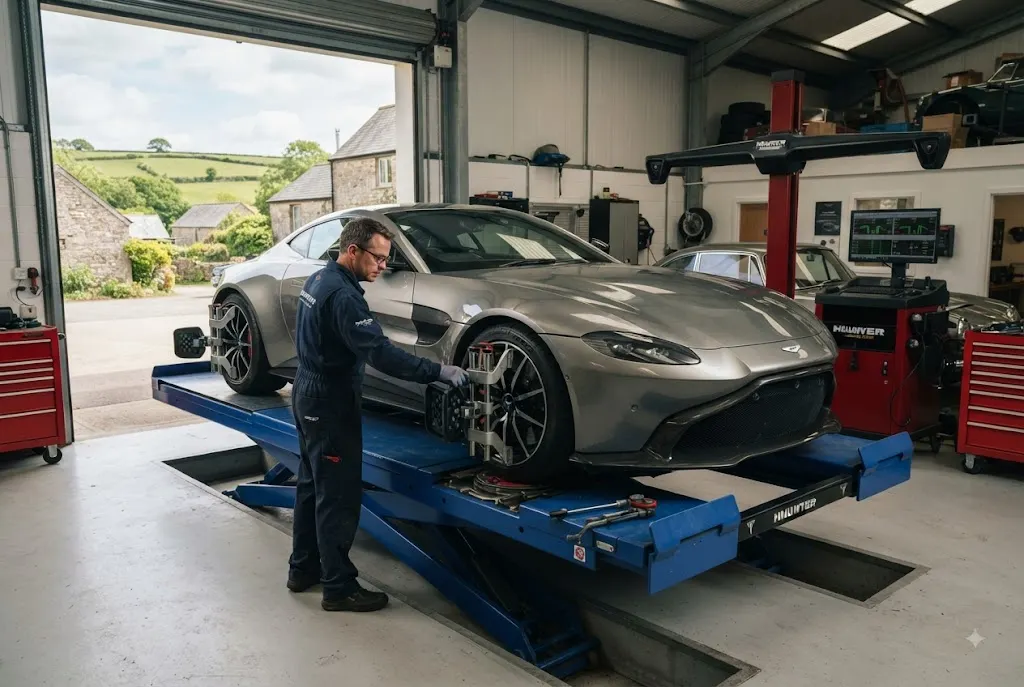
Wheel alignment involves checking and, where necessary, adjusting the angles of a vehicle’s wheels according to the manufacturer’s specifications. The exact alignment settings vary between vehicles and can depend on the suspension design and intended road use.
The aim is to ensure that the wheels and steering geometry are correctly positioned relative to the vehicle. When alignment is outside the appropriate specifications, the car may not behave as expected.
Alignment is not simply about making the steering wheel look straight. A technician needs to assess the vehicle’s geometry and determine whether the relevant measurements are within the manufacturer’s specified range.
Why Wheel Alignment Matters on Rural Roads
Rural driving can expose a vehicle to conditions that are different from regular urban commuting. Narrow lanes, uneven surfaces, road edges, debris and potholes can all place additional demands on tyres, wheels and suspension components.
The Isle of Wight Council identifies potholes and road defects among the highway maintenance issues handled through Island Roads. :contentReference[oaicite:0]{index=0}
Drivers cannot always avoid every road defect. However, being aware of how an impact may affect a vehicle can help motorists respond quickly when something changes.
A vehicle that has struck a substantial pothole or kerb may require an inspection even when there is no visible damage. Problems can sometimes become apparent later through steering changes, unusual tyre wear or vibration.
Wheel Alignment and Pothole Damage
Pothole damage is one of the reasons drivers may need to check their alignment. A significant impact can affect a wheel, tyre or suspension component and may alter the vehicle’s geometry.
Not every pothole strike causes alignment problems, so there is no need to assume that every minor bump requires an alignment service. However, a strong impact followed by a noticeable change in steering or handling deserves attention.
Possible signs include the vehicle pulling to one side, a steering wheel that no longer sits straight when travelling on a suitable level road, or tyres beginning to wear unevenly.
If a wheel or tyre has also suffered visible damage, the vehicle should be inspected promptly. Continuing to drive without checking a potentially damaged component can create additional safety risks.
Signs Your Car May Need an Alignment Check
Drivers may notice several changes when wheel alignment is outside the appropriate specification.
The Vehicle Pulls to One Side
If the vehicle consistently moves towards one side when the road conditions and wind do not explain the behaviour, it may be worth having the steering, tyres and alignment checked.
Pulling is not necessarily caused by alignment alone. Tyre pressure, tyre condition, braking problems and suspension faults can also affect how a car behaves.
The Steering Wheel Is Off Centre
An unusually positioned steering wheel while travelling straight can be a reason to arrange an inspection. The technician can determine whether the issue relates to alignment, steering components or another part of the vehicle.
Uneven Tyre Wear Appears
Uneven wear can be an important warning sign. The Highway Code’s vehicle maintenance guidance notes that excessive or uneven tyre wear can be associated with faults including wheels being out of alignment. :contentReference[oaicite:1]{index=1}
Because tyres are expensive safety-critical components, identifying unusual wear early can help prevent unnecessary replacement costs and reveal an underlying problem.
The Car Feels Unstable
A change in vehicle stability or steering response should never be dismissed simply as an alignment issue. Suspension, steering, tyres and other components can contribute to the symptoms.
A professional inspection is therefore more useful than trying to diagnose the cause based on one symptom alone.
Wheel Alignment vs Wheel Balancing
Wheel alignment and wheel balancing are related to wheel and tyre maintenance, but they address different issues.
The Wheel alignment concerns the position and angles of the wheels and steering geometry. It is particularly relevant when a vehicle pulls to one side, the steering feels unusual or tyres wear unevenly.
Wheel balancing concerns the distribution of weight around a wheel and tyre assembly. An imbalance can contribute to vibration, particularly at certain speeds.
Because the symptoms can sometimes overlap, drivers should explain exactly what they are experiencing rather than requesting a particular repair without an inspection.
A garage can then determine whether the issue is related to alignment, balancing, tyre condition, suspension or another component.
How Tyre Wear Can Reveal Alignment Problems
Tyres provide useful clues about how a vehicle is behaving. A healthy tyre should wear reasonably consistently when it is correctly inflated and the vehicle’s mechanical systems are operating properly.
Uneven wear across a tyre can indicate that something needs attention. However, tyre pressure is also important. Incorrect inflation can influence handling and wear patterns, so drivers should follow the pressure recommendations provided by the vehicle manufacturer.
GOV.UK guidance states that tyres must have the correct tread depth and be free from cuts and defects, while the Highway Code advises motorists to maintain tyre pressures according to the manufacturer’s specification. :contentReference[oaicite:2]{index=2}
Regular visual checks can therefore complement professional inspections.
Wheel Alignment and Vehicle Stability
Correct wheel geometry contributes to predictable steering and handling. When the wheels are not positioned correctly, the vehicle may respond differently to steering inputs or require more frequent correction.
This can become particularly noticeable on longer journeys or when driving on roads with changing surfaces.
Vehicle stability depends on much more than alignment, however. Tyres, suspension, brakes, steering components and road conditions all play a role. That is why an alignment service should not be treated as a universal solution to every handling complaint.
If a vehicle feels unstable, a qualified technician should inspect the relevant systems and identify the actual cause.
Coastal Routes and Changing Road Conditions
Island motorists regularly encounter different types of roads within relatively short journeys. A route may move from a town centre to a rural lane and then towards a coastal area, creating different demands on the vehicle.
Drivers should also remain alert to temporary road defects, surface deterioration, debris and changes caused by weather. The Isle of Wight’s highway maintenance service includes road defects, potholes, flooding and other issues affecting the road network. :contentReference[oaicite:3]{index=3}
Good vehicle maintenance cannot remove every road risk, but it can help ensure that tyres, steering and suspension are in suitable condition to deal with normal driving conditions.
When Should You Have Wheel Alignment Checked?
There is no single universal interval that applies to every vehicle. Drivers should follow the manufacturer’s maintenance recommendations and arrange an inspection when symptoms or events suggest that alignment may have changed.
An alignment check can be sensible after certain situations, including:
- A significant pothole or kerb impact.
- Replacement of certain steering or suspension components.
- Persistent uneven tyre wear.
- A noticeable change in steering behaviour.
- A steering wheel that appears off-centre while travelling straight.
- Repeated problems with the vehicle tracking to one side.
The appropriate response depends on the individual vehicle and the symptoms. A garage may discover that alignment is correct and another issue is responsible.
Choosing a Garage for Alignment Work
Wheel alignment requires suitable equipment and technicians who understand the vehicle’s steering and suspension geometry. When choosing a garage, ask whether it provides alignment checks and whether it has equipment suitable for your vehicle.
A reputable workshop should be able to explain the measurements and identify whether adjustments are necessary. If additional suspension or steering repairs are recommended, ask why those parts need attention before approving the work.
Drivers can choose between independent workshops and larger automotive networks. Both can provide useful services when they have the correct equipment and technical expertise.
If you are comparing workshop options, you can also read our guide to independent garages and national chains before deciding where to book maintenance.
Alignment After New Tyres
Fitting new tyres does not automatically mean that a vehicle needs an alignment adjustment. However, tyre replacement can be a useful opportunity to check the condition of the wheels, steering and suspension.
If the old tyres show unusual or uneven wear, it is worth asking the technician whether alignment or another mechanical issue could have contributed.
Simply fitting new tyres without investigating the cause of abnormal wear could allow the same problem to affect the replacement tyres.
Correct tyre pressure should also be maintained after installation. The manufacturer’s recommended pressures should be used rather than relying on a generic figure.
What Drivers Should Check After an Alignment
Once alignment work has been completed, the vehicle should feel consistent with its normal handling characteristics. Drivers can pay attention to the steering during their next journeys without attempting to perform any technical assessment themselves.
If the vehicle continues to pull, the steering wheel remains noticeably off-centre or new symptoms appear, contact the garage again. It may be necessary to investigate another component or road-related issue.
Alignment should be considered part of the wider maintenance picture rather than an isolated repair.
Wheel Alignment and Tyre Safety
Tyres are a critical part of vehicle safety because they provide the contact between the vehicle and the road. The UK’s legal minimum tread depth for most cars is 1.6mm across the central three-quarters of the tyre and around the entire circumference. :contentReference[oaicite:4]{index=4}
Drivers should not wait until tyres reach the legal limit before thinking about their condition. Cuts, bulges, unusual wear and damage can all justify an earlier inspection.
Correct alignment can help support even tyre wear, but it cannot compensate for damaged or incorrectly inflated tyres. All these factors need to be considered together.
Preparing for Rural and Longer Island Journeys
Before a longer journey, particularly one involving rural or coastal routes, drivers can perform a few simple checks.
- Check tyre pressures when the tyres are cold.
- Inspect tyres for visible cuts, bulges or unusual wear.
- Make sure the vehicle has no unresolved warning lights.
- Check that steering behaviour feels normal.
- Confirm that scheduled servicing is up to date.
- Arrange a professional inspection if the vehicle has recently suffered a significant impact.
These checks do not replace professional servicing, but they can help motorists identify obvious problems before setting off.
Keeping Your Vehicle Stable on Island Roads
Good vehicle stability depends on the condition of several interconnected systems. Correct wheel alignment, properly inflated tyres, healthy suspension and functional steering components all contribute to predictable handling.
For Isle of Wight drivers, paying attention to these areas can be particularly worthwhile because journeys may include a variety of road surfaces and conditions.
A pothole strike or unusual tyre wear does not necessarily mean an expensive repair is required. A professional inspection can determine whether the issue is minor or whether further work is necessary.
Final Thoughts on Wheel Alignment
Wheel alignment is an important part of maintaining a vehicle’s steering, handling and tyre condition. For motorists travelling across the Isle of Wight, awareness of pothole damage, uneven tyre wear and changes in steering behaviour can help identify potential problems early.
Wheel alignment should not be confused with wheel balancing, and neither service should be used as a substitute for a complete inspection when a vehicle develops handling problems. A qualified garage can assess the tyres, steering, suspension and alignment together to identify the most appropriate solution.
By keeping tyres correctly inflated, checking for unusual wear and arranging an inspection after significant impacts, drivers can take sensible steps towards maintaining vehicle stability on rural roads, coastal routes and everyday Island journeys.