

The island’s transport system has its own practical considerations. Drivers may need to coordinate road journeys with ferry crossings, account for seasonal travel patterns or find alternative routes when roadworks affect familiar roads. This guide looks at the main areas that shape motoring and transport across the Isle of Wight.
What Does Island Motoring Involve?
Island motoring covers the everyday experience of travelling by car around the Isle of Wight and connecting with the mainland. It includes ordinary commuting and local journeys, but it can also involve ferry travel, changing road conditions, seasonal traffic and access to different parts of the island.
For local motorists, the ability to plan around these factors is often just as important as knowing the shortest route. A journey that appears straightforward on a map may take longer when ferry schedules, traffic levels or temporary road restrictions are taken into account.
Drivers can therefore benefit from checking current transport information before longer journeys, particularly when travelling at busy times or when a road closure has been announced.
Understanding Isle of Wight Transport Connections
The Isle of Wight is connected to the mainland by several ferry routes, making ferry services an important part of the island’s transport network. Vehicle travellers need to consider both the road journey to the port and the sailing itself when planning mainland trips.
Different routes serve different mainland destinations, so the most suitable crossing can depend on where you are starting on the island and where you need to go after reaching the mainland. Journey planning should therefore consider the complete trip rather than looking at the ferry crossing in isolation.
Ferry operators publish their own timetables, ticket information and travel updates. Travellers should check the relevant operator directly for current sailing times, availability, restrictions and service information before departure.
Ferry Services and Everyday Driving
Ferry services can influence the timing of journeys for island motorists. A driver heading to work, an airport, medical appointment or business meeting on the mainland may need to build additional time into the itinerary.
Booking requirements can also vary depending on the operator and journey. Some crossings may be busier during weekends, school holidays or seasonal periods. Checking current information before travelling is therefore preferable to relying on an old timetable or a previous journey experience.
Weather and operational circumstances can also affect ferry services. When a mainland journey is important, motorists should leave enough flexibility to deal with unexpected changes.
Road Closures on the Isle of Wight
Temporary road closures can result from planned works, emergencies, infrastructure projects, events or other circumstances. Even a short closure can affect a familiar route if there are limited practical alternatives.
When a road closure is announced, drivers should follow official diversion signs rather than attempting to enter restricted sections. Navigation apps can help identify alternative routes, but motorists should still pay attention to physical road signs and instructions from authorities.
For planned journeys, checking current local road information before departure can help identify potential delays. This is especially useful for commercial drivers and people travelling to appointments where arriving at a specific time matters.
How Local Traffic Can Change During the Day
Traffic conditions on the island are not constant. Commuting periods, school travel, tourist activity, events and seasonal visitor numbers can all affect journey times.
A route that is normally quick during a quieter period may take longer when traffic increases. This does not necessarily mean that motorists need to avoid the route altogether. Instead, allowing additional time and checking current conditions can make journeys more predictable.
Drivers who regularly travel the same route can also benefit from understanding where delays commonly develop. Having an alternative route in mind can be useful when an unexpected obstruction occurs.
Coastal Routes and Island Travel
Coastal routes are an important part of the Isle of Wight’s road network and can provide access to towns, villages and attractions around the island. They can also form part of scenic journeys for residents and visitors.
However, motorists should not assume that a scenic coastal route will always be the quickest option. Road conditions, bends, traffic, temporary restrictions and weather can all influence journey times.
Drivers should adapt their speed and driving style to the actual road conditions. Visibility, wind, rain and surface conditions can affect how a vehicle behaves, particularly on exposed stretches of road.
Vehicle Maintenance Is Part of Island Motoring
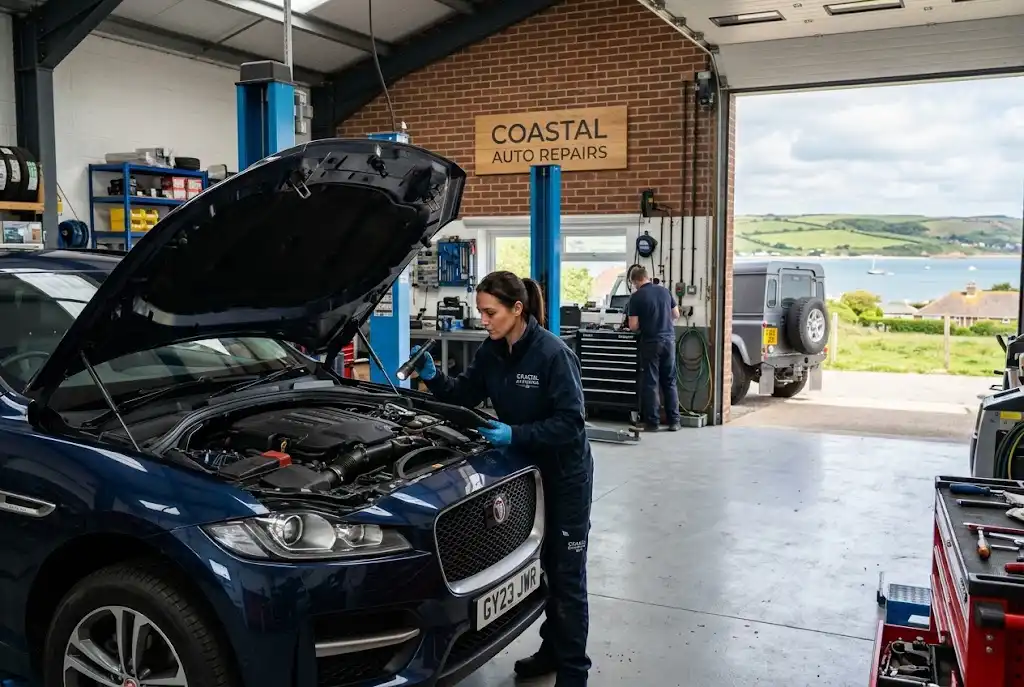
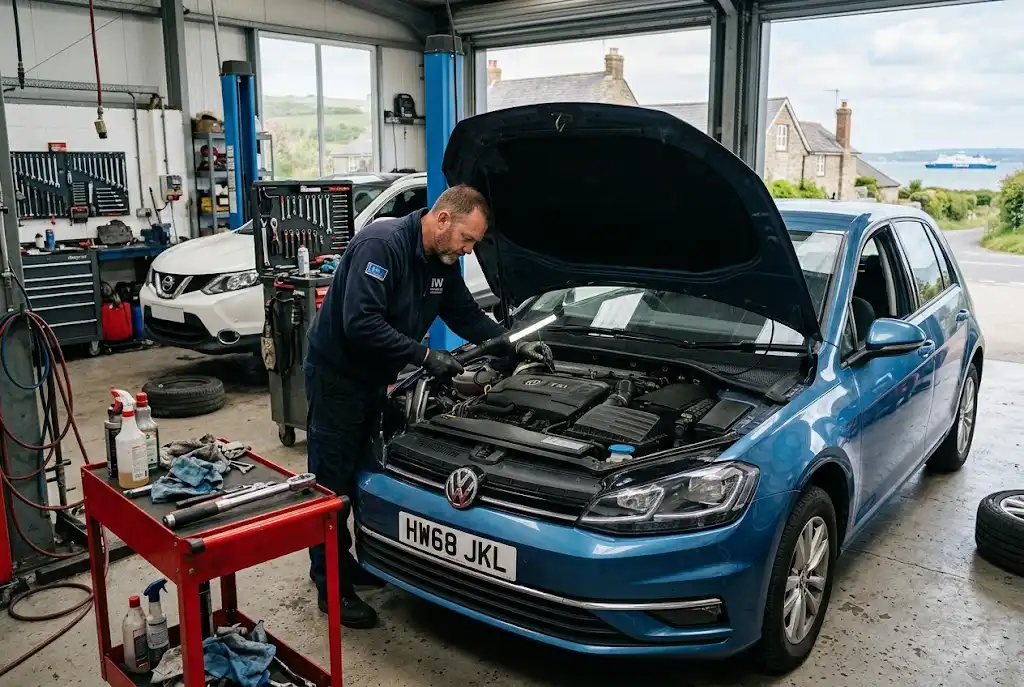
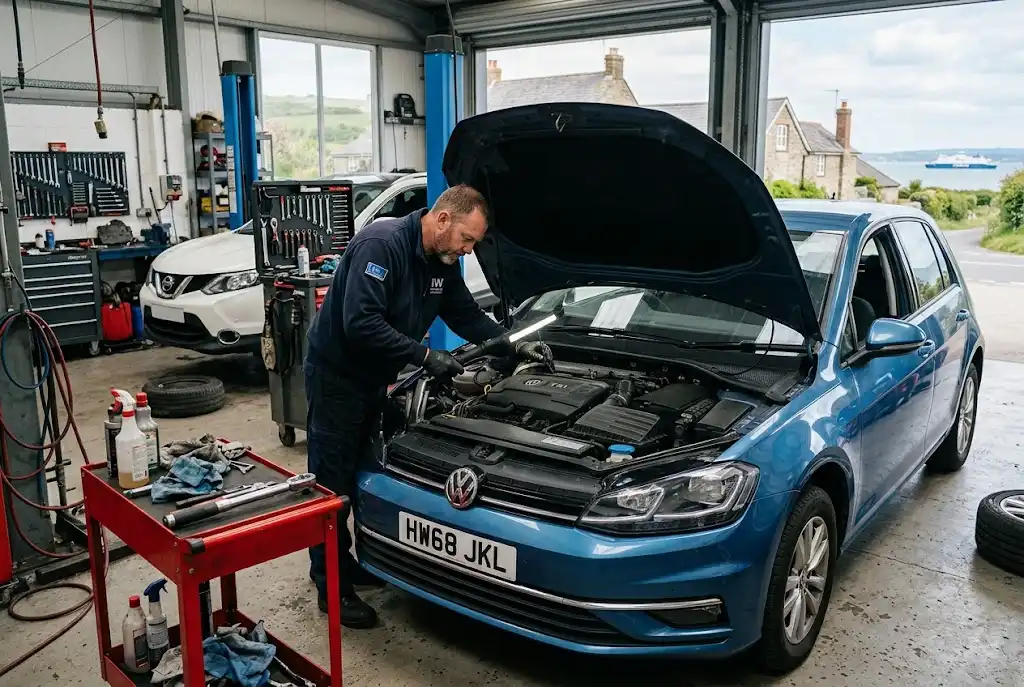
Reliable transport depends partly on having a vehicle that is properly maintained. Routine servicing, MOT testing and inspections all have different roles in keeping a car suitable for everyday use.
An MOT checks specified legal safety and environmental requirements at the time of testing, while routine servicing is concerned with maintaining the vehicle according to its service requirements. A broader inspection can also be useful when a driver has concerns about vehicle condition.
Our guides to MOT and service and auto inspection services provide more detailed information about annual testing, vehicle checks and professional inspections.
Planning Around Ferry and Road Conditions
For an island driver, journey planning can involve several moving parts. A mainland trip may include a local road journey, a ferry crossing and another road journey after arriving on the mainland.
It is sensible to allow a buffer between the expected arrival time of the ferry and any important appointment. A delayed departure, increased traffic or a longer-than-expected road journey can otherwise leave little room for unexpected events.
When travelling at particularly busy times, checking the ferry operator’s current travel information and allowing additional road travel time can make the overall journey less stressful.
Transport Updates for Businesses and Commuters
Transport disruption can have a wider effect on people who travel for work. Employees commuting to the mainland may need to adjust their schedules, while island businesses that rely on vehicle movements may need to account for ferry and road conditions.
Delivery drivers and service businesses can benefit from checking planned road restrictions before scheduling jobs. Where possible, grouping appointments by area can also reduce unnecessary mileage and make better use of available travel time.
For households, similar planning can help coordinate school, work, shopping and other commitments around known transport changes.
Preparing for Seasonal Changes in Island Traffic
Traffic patterns can change during holiday periods and other busy parts of the year. Increased visitor numbers can affect roads, parking areas and ferry demand, particularly around popular destinations and travel connections.
Residents who know they will need to make an important journey during a busy period can plan earlier than usual. Checking travel information, allowing extra time and avoiding unnecessary last-minute changes can all help.
Visitors can also make their journeys easier by familiarising themselves with ferry arrangements, parking options and their intended driving route before arriving.
What Drivers Should Check Before Setting Out
A short pre-journey check can help motorists avoid preventable problems. Before a longer trip, consider checking:
- Current road and traffic conditions
- Any announced road closures or diversions
- Ferry departure times if travelling to the mainland
- Fuel or battery charge
- Tyre condition and pressure
- Lights and windscreen visibility
- Weather conditions
- Parking arrangements at the destination
Drivers should also make sure their vehicle is legally permitted to be on the road and that required documents and insurance arrangements are in place.
Electric and Hybrid Vehicles in Island Transport
The changing vehicle market is also influencing island mobility. Electric and hybrid cars are increasingly part of the wider UK transport landscape, creating new considerations around charging, servicing and vehicle maintenance.
Drivers using an electric vehicle should plan longer journeys around suitable charging opportunities and check that charging points are compatible with their vehicle. Hybrid owners should understand the maintenance requirements of their particular powertrain.
Our guide to hybrid services on the Isle of Wight explores specialist maintenance, EV servicing, diagnostics and charging considerations in more detail.
How to Make Island Journeys More Predictable
No journey can be guaranteed to run exactly according to plan, but a few simple habits can improve preparation. Check current travel information before important journeys, allow reasonable time for ferry and road connections, and keep the vehicle maintained.
It is also worth having a backup plan for significant mainland trips. If a road closure affects the route to the ferry terminal, knowing an alternative route can prevent unnecessary delays. Likewise, allowing some flexibility after the planned ferry arrival can provide useful protection against traffic or operational changes.
Staying Informed About Island Motoring
Good island motoring is about more than getting from one location to another. It involves understanding the relationship between local roads, ferry services, traffic conditions, vehicle maintenance and wider transport changes across the Isle of Wight.
Drivers can make everyday journeys easier by checking current information before setting out and maintaining their vehicles properly. For important trips, especially those involving ferry connections, allowing additional time can make a significant practical difference.
As the Isle Post Auto Services cluster grows, these practical motoring resources can help residents and visitors understand everything from car service cost and vehicle inspections to MOT requirements, hybrid maintenance and the transport factors that shape everyday island travel.