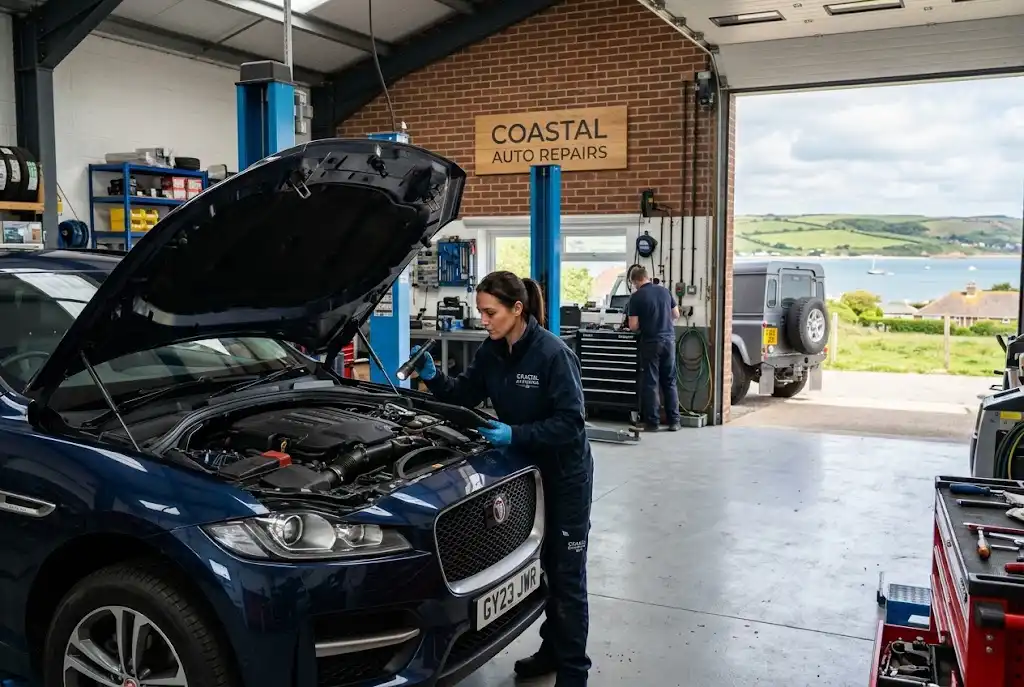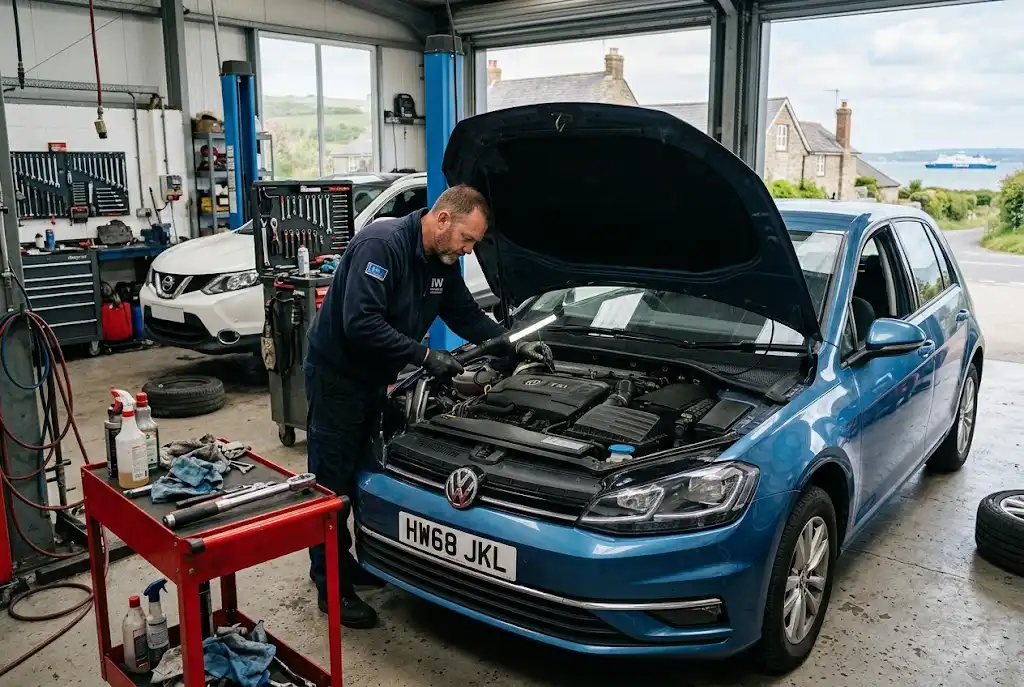
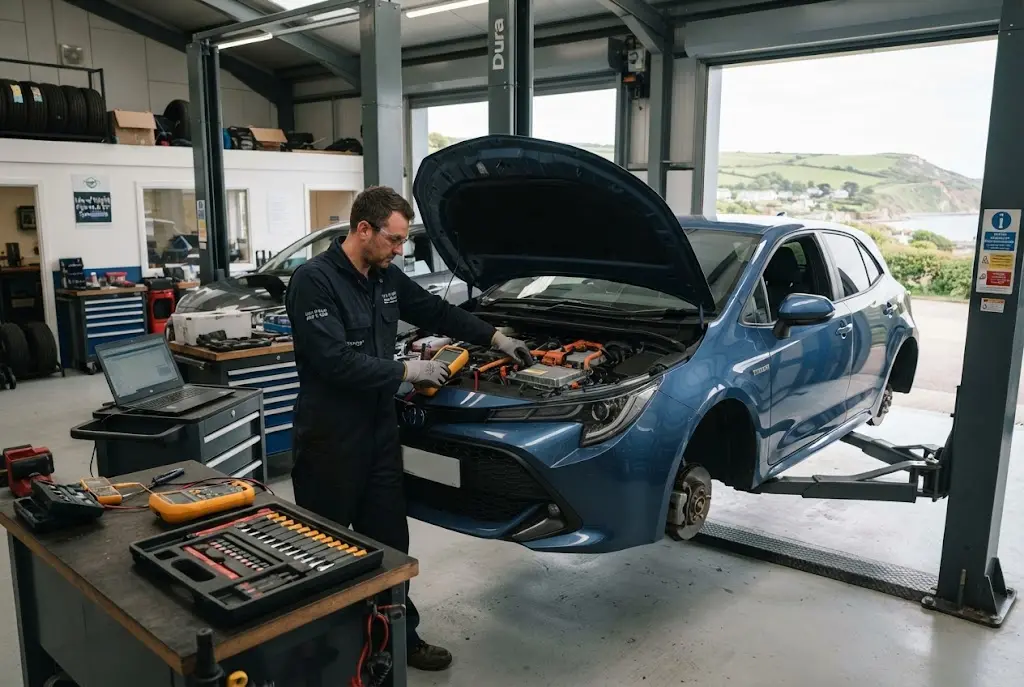

For island motorists considering an electric vehicle, already driving a hybrid or maintaining a fully electric car, understanding the difference between routine servicing and specialist EV work can make vehicle ownership easier. Local servicing can also be particularly convenient when compared with the practicalities of travelling to the mainland for specialist automotive assistance.
What Do Hybrid Services Include?
Hybrid services can cover a range of maintenance and diagnostic work for vehicles that combine an internal combustion engine with an electric motor and battery system. The precise work depends on the vehicle’s design, age, mileage and manufacturer requirements.
Some routine maintenance remains similar to conventional vehicles. Tyres, brakes, suspension, steering, lights and other components still need appropriate attention. However, hybrid vehicles also have high-voltage electrical systems and other components that require suitable training and equipment.
When booking a garage, tell the technician the exact vehicle model and powertrain. This allows the garage to confirm that it has the appropriate equipment and expertise for the work required.
Hybrid Services and EV Servicing Are Not Identical
Hybrid and fully electric vehicles share some technologies but are not mechanically identical. A conventional hybrid generally combines an internal combustion engine with an electric drive system, while a battery-electric vehicle relies entirely on electrical energy for propulsion.
That distinction affects maintenance requirements. A hybrid may still require engine oil and other engine-related maintenance, whereas a fully electric vehicle does not have an internal combustion engine requiring conventional oil servicing.
Both types of vehicles can require attention to tyres, brakes, suspension, steering, cooling systems, software and electrical components. The exact maintenance schedule should therefore be based on the manufacturer’s recommendations for the individual vehicle.
Why Specialist EV Servicing Matters
Electric vehicles contain high-voltage components that require appropriate safety procedures. Technicians working on these systems need suitable training and equipment, particularly when diagnosing faults or carrying out work involving high-voltage components.
For island motorists, checking a garage’s EV capabilities before booking is therefore important. Ask whether the business has technicians trained to work on the relevant vehicle technology and whether it can perform the diagnostic or maintenance work your vehicle requires.
A garage that routinely works on conventional cars may not necessarily provide every type of EV or hybrid service. Confirming capabilities in advance can prevent unnecessary delays and help avoid arranging specialist work elsewhere.
Electric Vehicle Maintenance on the Isle of Wight
Electric vehicle maintenance generally focuses on the vehicle systems that remain relevant even without an internal combustion engine. Tyres, brakes, suspension, steering, lights and other safety-related components still require inspection and maintenance.
Battery health and electrical-system diagnostics can also be important. However, the appropriate checks vary by manufacturer and vehicle design. Drivers should follow the recommended maintenance schedule and use suitable specialists for work involving high-voltage systems.
Modern EVs can also receive software updates or require electronic diagnostics. A workshop with appropriate manufacturer-level or compatible diagnostic equipment may be better equipped to investigate certain problems.
How Regenerative Braking Affects Maintenance
Many hybrid and electric vehicles use regenerative braking to recover energy during deceleration. This can change how the braking system is used compared with a conventional petrol or diesel vehicle.
Regenerative braking does not mean that conventional braking components can be ignored. Brake discs, pads and other components still need appropriate inspection and maintenance. Drivers should also report changes in braking feel, unusual noises or warning messages to a qualified professional.
Regular inspections are useful because a vehicle’s braking system remains fundamental to road safety regardless of its powertrain.
Hybrid Mechanics and Diagnostic Equipment
Hybrid mechanics need to understand both conventional vehicle systems and the electrical components specific to hybrid technology. Depending on the vehicle, diagnosis may involve electronic control units, battery systems, sensors, electric motors and conventional engine components.
Diagnostic equipment can help technicians identify stored fault codes and investigate electronic issues, but a diagnostic code is not automatically a complete diagnosis. Additional testing may be required before a repair can be recommended.
When comparing garages, ask whether diagnostic work is included in the quoted service price or charged separately. This is especially useful when investigating an intermittent warning light or electrical fault.
Charging Points and Everyday Island Mobility
Access to charging infrastructure is an important consideration for electric vehicle ownership. Drivers should understand where they can charge at home, at work and during longer journeys before relying heavily on an EV for everyday travel.
For Isle of Wight residents, charging availability can also form part of wider journey planning. A driver who regularly travels across the island or uses ferry services should consider the locations and types of charging facilities available along their normal routes.
Public charging networks can change over time, so drivers should check current availability, connector compatibility, payment requirements and charging speeds before setting out. A home charger can also be useful for owners who have suitable off-street parking and electrical installation arrangements.
EV Servicing Before Longer Journeys
Electric and hybrid vehicles should receive the same practical attention to roadworthiness as other cars before a long journey. Check tyres, lights, windscreen condition and other basic safety items, and make sure the vehicle has sufficient charge or fuel for the planned route.
If a vehicle has displayed a warning message, developed an unusual noise or shown a change in performance, arrange an appropriate inspection before travelling rather than assuming the problem will resolve itself.
For motorists travelling between the Isle of Wight and the mainland, planning ahead can be particularly useful when specialist assistance may be needed. Addressing known issues locally can sometimes reduce the disruption associated with arranging a mainland visit.
Hybrid Services for Older Vehicles
Older hybrid vehicles can remain practical transport when properly maintained. As with any vehicle, age, mileage, service history and condition all influence ongoing maintenance requirements.
Hybrid battery systems can attract particular attention from owners, but motorists should avoid assuming that a certain battery problem exists simply because a vehicle has reached a particular age. A professional diagnosis is more useful than relying on generalised replacement timelines.
If a hybrid develops a warning light or change in performance, ask a suitable technician to diagnose the actual fault. This can help distinguish between a battery-related issue, a conventional mechanical problem and an electronic or sensor fault.
What to Ask an Isle of Wight Hybrid Specialist
Before booking hybrid or EV work, motorists can ask a few practical questions:
- Does the garage regularly work on hybrid or electric vehicles?
- Are technicians trained for high-voltage vehicle systems?
- Can the garage perform the required diagnostic checks?
- Does the service follow the vehicle manufacturer’s maintenance requirements?
- Are additional diagnostic or repair charges explained before work begins?
- Can the garage provide a written record of work completed?
These questions can help drivers identify whether a workshop is appropriate for their particular vehicle rather than assuming every garage offers the same specialist capability.
How Hybrid and EV Ownership Can Affect Maintenance Planning
Running costs for hybrid and electric vehicles differ from those of conventional vehicles. Fuel or electricity use is only one part of the calculation. Drivers should also consider tyres, servicing, insurance, charging arrangements, repairs and other ownership expenses.
Routine maintenance can be easier to budget when drivers follow the manufacturer’s recommended schedule and keep records of completed work. A written maintenance history can also be useful when the vehicle is eventually sold.
For a broader look at vehicle maintenance budgeting on the island, see our guide to car service cost on the Isle of Wight. It covers servicing prices, repair expenses, local garage comparisons and the wider costs that can influence family motoring budgets.
Hybrid Services and the Future of Island Mobility
Electric and hybrid vehicles form part of the wider shift towards lower-emission transport. Their growing presence means local garages and motorists alike need to adapt to changing vehicle technology.
For drivers, that means learning how their particular vehicle should be maintained and identifying suitable service providers before specialist work becomes urgent. For garages, it means having the appropriate skills, equipment and safety procedures for increasingly diverse powertrains.
The transition does not eliminate the need for traditional automotive expertise. Instead, it adds new areas of knowledge alongside familiar maintenance disciplines.
Keeping Hybrid and Electric Vehicles Roadworthy
Appropriate hybrid services can help Isle of Wight motorists maintain vehicles that combine conventional and electric technologies. Whether you drive a hybrid, plug-in hybrid or fully electric vehicle, maintenance should be based on the vehicle’s actual requirements rather than assumptions about the technology.
Choosing a suitable garage, following the manufacturer’s maintenance schedule and addressing warning signs promptly can help keep the vehicle in good working order. Drivers should also consider charging arrangements and journey planning as part of everyday EV ownership.
As island motoring continues to evolve, understanding specialist servicing will become increasingly useful. Combined with appropriate auto inspection services and regular MOT and service appointments, specialist maintenance can form part of a practical long-term vehicle care routine.