
Sustainable beauty is about making beauty choices that respect your skin, other people and the planet, without giving up the pleasure of a routine that works for you. It is not a single product, a label or a trend. Instead, it is a way of thinking about what you buy, how it was made, how long it lasts and what happens when it is finished.
For UK readers, that means looking beyond bold claims on a shelf or a screen. It also means building habits that sit comfortably within British beauty culture, where a routine is personal, practical and shaped by everyday life. This guide explains sustainable beauty in plain terms. It covers ingredients, packaging, waste and product lifespan. It also shows how to spot weak claims and how to make calmer, better-informed choices.
What Sustainable Beauty Really Means
At its heart, sustainable beauty asks a simple question: what did this product cost the world, as well as your purse? The answer reaches back before the product reached your bathroom shelf. Think about where ingredients came from and how growers or makers produced them. Think, too, about the people in the supply chain and whether the work treated them fairly. Finally, consider how much energy, water and transport the product needed along the way.
A sustainable approach also looks forwards. You get far more value from a product you use fully and enjoy than from one you open once and forget. Product lifespan matters, and so does what happens to the bottle, jar or tube afterwards. Packaging that you can refill, reuse or recycle easily carries a lighter impact. Packaging that heads straight for landfill from the start adds more waste to the routine.
Sustainable Cosmetics in Everyday Practice
Sustainable cosmetics are not about a colour palette, a price or a rustic look. They are everyday make-up and personal care products that you choose with more care. That care starts with the ingredient list and the way makers produce a product. It also shows in how companies package, ship and sell it. A thoughtful choice is one you can explain, rather than one you bought because the packaging looked natural.
In practice, sustainable cosmetics often favour fewer, better products over a crowded bag of near duplicates. A foundation that truly matches you is more sustainable than three that almost do. A lipstick you wear until it is finished beats one bought for a single evening. Multi-use products can help, too. A tint that works on lips and cheeks, for example, can replace two separate items without asking you to accept less.
Sustainable Skincare That Respects Your Skin
Sustainable skincare begins with a calm idea: your skin rarely needs everything at once. A gentle cleanser, a moisturiser that suits you and daytime sun protection form a steady base for many people. Extra steps should earn their place. When you add products one at a time, you can see what helps. You also avoid the waste that comes from reactions, overlap and half-used bottles.
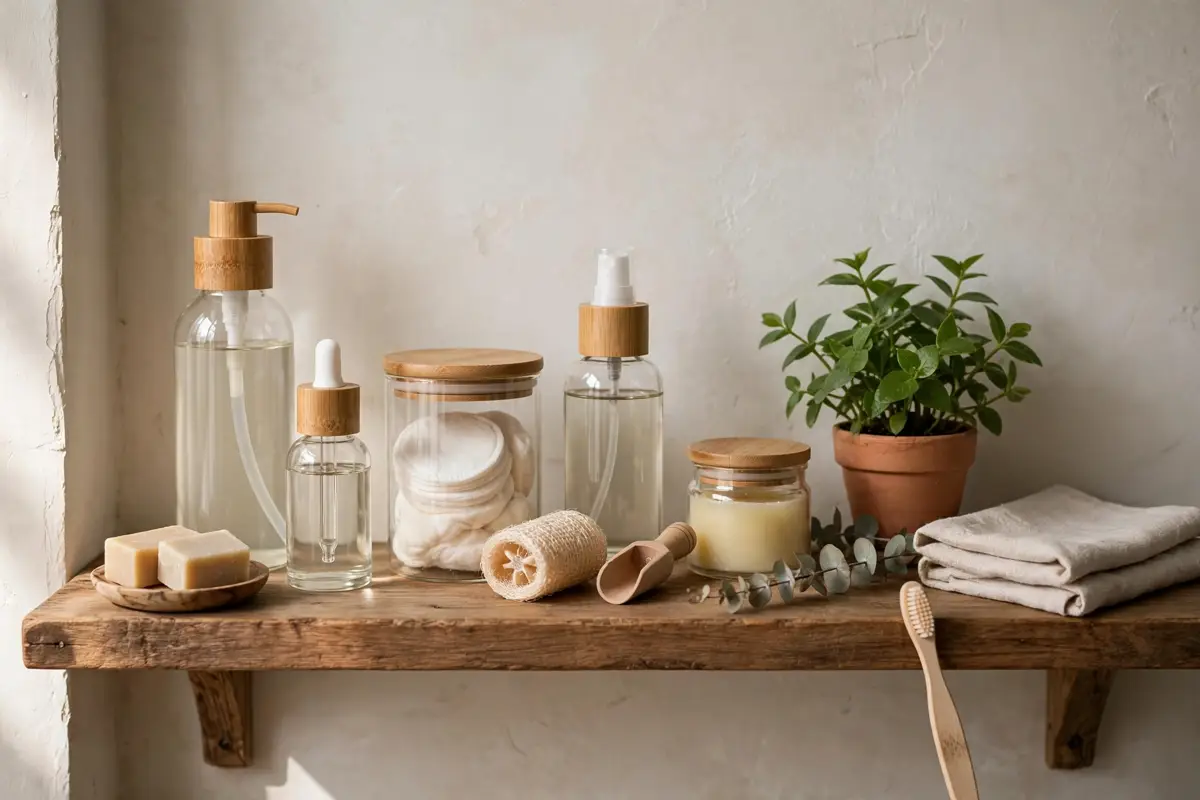
Format can make a real difference as well. Solid cleansers, solid shampoo bars and concentrated products can reduce the need for bulky packaging and repeated shipping of water-heavy formulas. Refillable skincare can also work well, provided the refill system is easy to use and the container is sturdy. The most sustainable skincare choice, though, is usually the one you will use consistently, in the right amount, until the end.
Sustainable Beauty Packaging: Refillable, Recyclable and Designed to Last
Packaging is where many routines create the most visible waste. Sustainable beauty packaging tries to reduce that waste at the design stage. It may use less material in the first place. Designers may also choose a single material that recyclers can process more easily. Or they may design the pack for keeping, refilling and using again. Each approach has a place, and none should be judged by looks alone.
Refillable packaging works best when the outer container feels sturdy and you can buy the refill easily, locally or by post. Recyclable packaging works best when you can follow clear instructions and place it in the right collection at home. Watch for mixed materials, tiny components and pumps that are hard to separate. They do not make a product bad, but they do make thoughtful disposal harder for the person using it.
Eco Friendly Beauty Habits and Zero Waste Beauty
You do not need a new routine to begin. Eco friendly beauty often starts with the products already in your drawer. Use what you own before you replace it. Finish a product where it is safe and pleasant to do so. Cut tubes open only if you can do so safely, and take care with hygiene. Small habits like these respect both the money and the materials already spent.
Zero waste beauty builds on the same idea. It aims to send as little as possible to landfill, while staying realistic about modern life. That can mean choosing products with less packaging, reusing sturdy containers and avoiding free samples you know you will not use. It can also mean buying a standard size you will finish, rather than a bargain size that goes off in the cupboard. Progress matters more than purity here.
Green Beauty and How to Spot Greenwashing
Green beauty is a broad term for products that brands present as kinder to the environment. It can be a helpful starting point, but it is not a guarantee. Because words such as natural, clean and pure can sound reassuring without saying much, green beauty needs a closer look. Ask what the claim actually means. Is it about ingredients, packaging, sourcing or all three? A clear answer is a good sign.
Warning Signs to Watch For
Greenwashing happens when marketing makes a product sound more sustainable than the evidence supports. Warning signs include vague claims with no detail, leafy images on otherwise ordinary packaging and a single green feature used to distract from the rest. Be wary of claims that name no standard, explain no process and offer no way to check them. Reading around a topic also helps. Our overview of beauty research shows how evidence and cosmetic science sit behind the claims you meet as a shopper.
Certification can help, in general terms, because it suggests that an independent body has checked a product or ingredient against a stated standard. Even then, it is worth asking what that standard covers. One scheme may focus on ingredient sourcing. Another may focus on animal testing, packaging or farming. None covers everything. Treat certification as a useful clue, not as a final verdict, and value brands that explain their limits honestly.
Circular Beauty: Keeping Products and Packaging in Use
Circular beauty borrows a simple idea from the wider circular economy: keep materials in use for as long as possible. Instead of a straight line from purchase to bin, a circular approach designs products and packaging for another round. That can mean refill stations in shops, where you bring a container back and staff fill it again. It can also mean take-back schemes, where you return used packaging for recycling or reuse.
For shoppers, circular beauty works best when taking part is easy. A scheme that needs a special journey or complex posting may not suit your life. A local refill option you pass each week is far more likely to become a habit. Look for clear instructions, clean and safe refill processes and containers that stay in good condition. When a system is convenient, it stops feeling like a project.
The Beauty Carbon Footprint, Explained Simply
The beauty carbon footprint is a way of describing the climate impact linked to a product across its life. Making ingredients, manufacturing, packaging and transport can all add to that impact. So can heating water for a long routine and disposing of packaging afterwards. This article will not attach invented figures to those stages. The point is the pattern, not a false sense of precision.
Thinking in this way helps you choose where to act first. Fewer unnecessary purchases usually matter more than agonising over a single item. Using products fully, choosing lighter or refillable packaging where it suits you and avoiding rushed deliveries can all help in qualitative terms. So can using less hot water where you comfortably can. Use a beauty carbon footprint as a guide for attention, not as a source of guilt.
Practical Steps for UK Consumers
Start where you are, and change one thing at a time. The steps below are deliberately modest, because modest steps are the ones that last. They also fit alongside wider beauty trends in the UK, where many shoppers are moving towards simpler routines and more considered purchases.
- Shop your own shelves first, and finish open products before buying replacements.
- Buy fewer products, but choose ones that suit you and that you will enjoy using.
- Choose refillable, recyclable or solid formats when they work well for the product and for you.
- Read claims closely, and look for detail about ingredients, sourcing and packaging before you trust them.
- Use local refill stations or take-back schemes when they are genuinely convenient.
- Recycle empty packaging according to the instructions and your local collection rules.
- Pass on unopened products you will not use, where it is safe and appropriate to do so.
Taken together, these habits make sustainable beauty part of normal life rather than a separate, demanding regime. You keep the ritual, the colour and the care. You simply waste less of it. That is a standard most routines can meet, and one that leaves room for pleasure as well as principle.