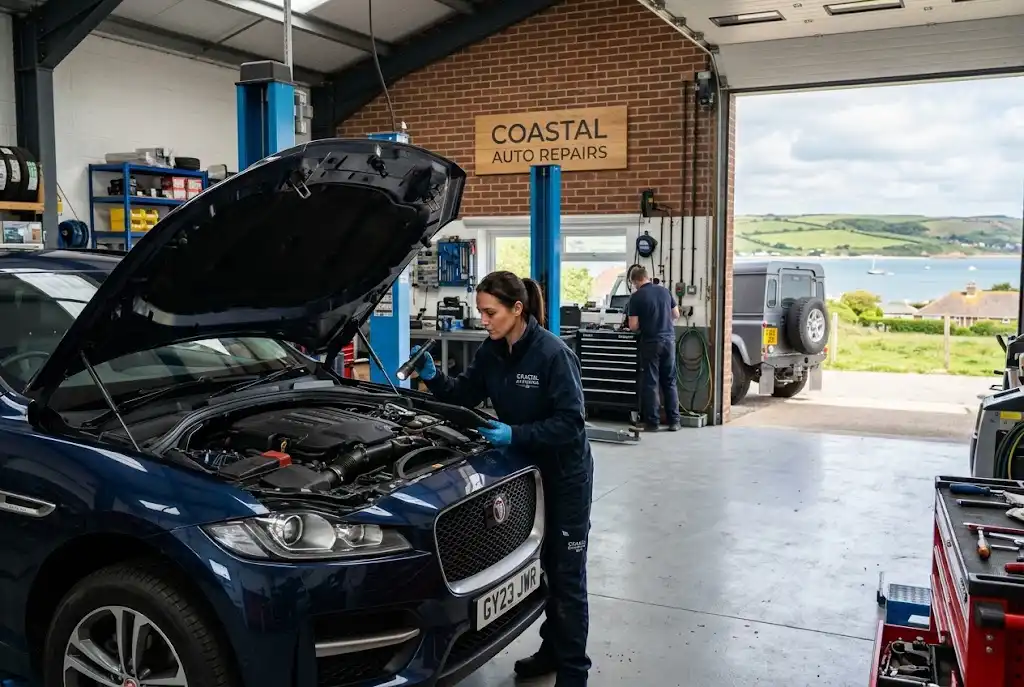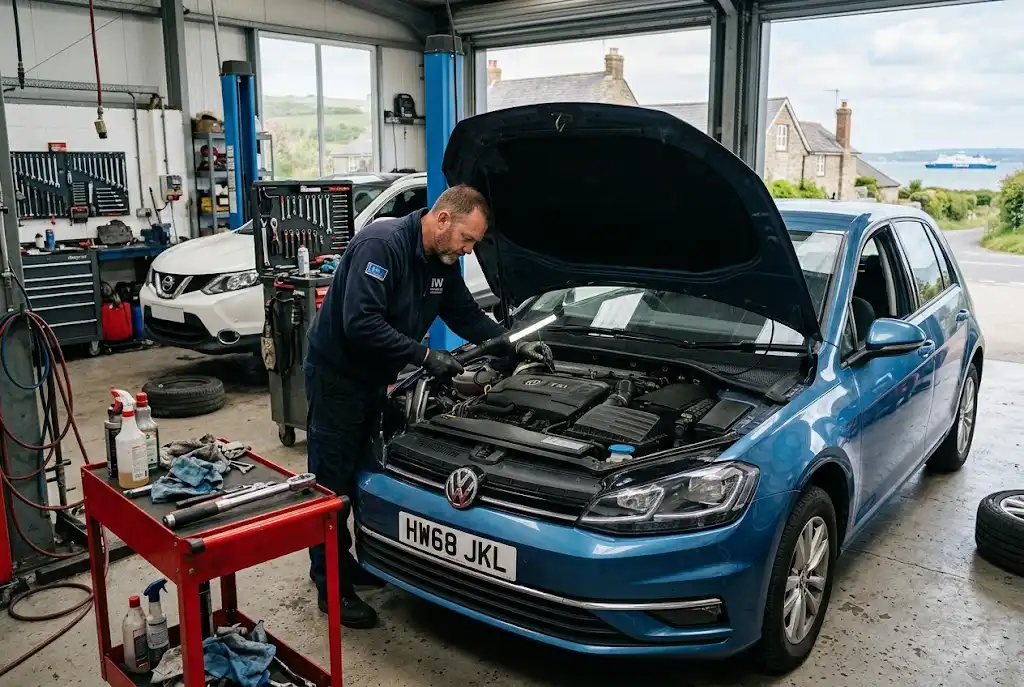
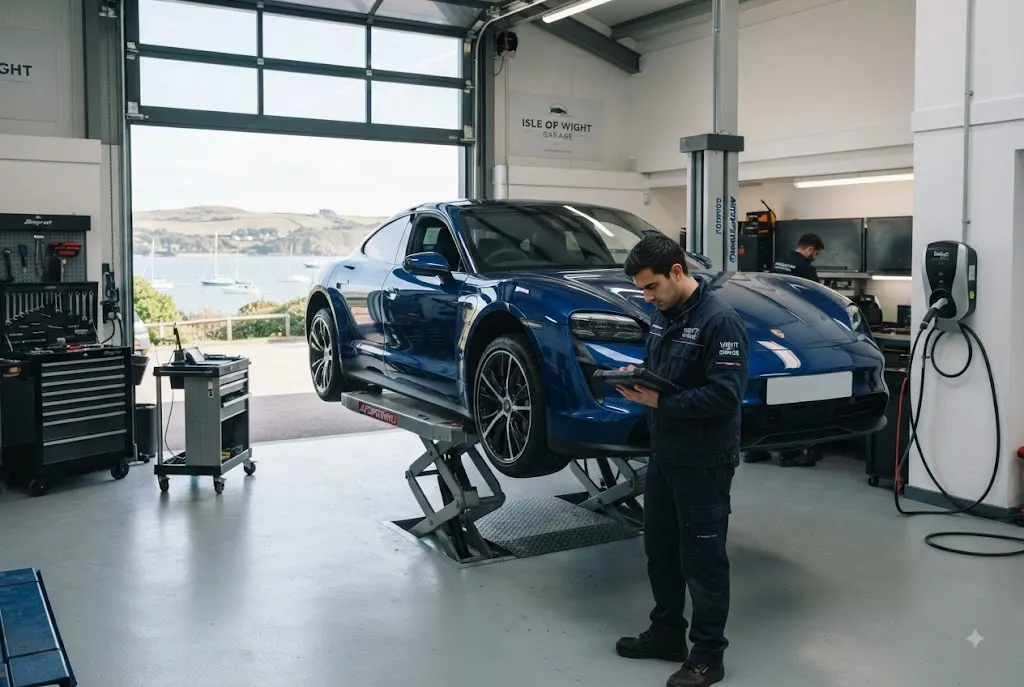

EV servicing is becoming an increasingly important consideration for motorists on the Isle of Wight as more drivers move towards fully electric vehicles. Electric cars have fewer conventional mechanical components than petrol and diesel vehicles, but they still require regular checks, specialist knowledge and appropriate maintenance to remain safe and reliable.
For Island drivers, choosing the right garage is particularly important. An electric vehicle may be used for short journeys around Newport, Ryde, Cowes or Sandown, longer trips across the Island, and ferry journeys to the mainland. Understanding what electric vehicle maintenance involves can help owners plan servicing and identify suitable EV mechanics before a problem develops.
This guide explains the main aspects of EV servicing, including battery care, braking systems, tyres, diagnostics, charging equipment and the practical considerations of owning an electric vehicle on the Isle of Wight.
Why EV Servicing Matters on the Isle of Wight
Electric vehicles use a battery and electric motor rather than a conventional petrol or diesel engine. As a result, they do not require some of the routine engine-related maintenance associated with combustion vehicles, such as engine oil and oil-filter changes.
However, that does not mean an EV is maintenance-free. Electric cars still have tyres, brakes, suspension components, steering systems, lights, cooling systems and other equipment that need to remain in good condition.
The high-voltage electrical system also requires appropriate knowledge when specialist work is necessary. GOV.UK guidance for MOT testers highlights the need for caution around high-voltage components and cabling on electric and hybrid vehicles. :contentReference[oaicite:0]{index=0}
For Island motorists, reliable maintenance is especially useful because many journeys depend on having a dependable vehicle. A planned servicing schedule can reduce the likelihood of avoidable problems interrupting work, family travel or mainland trips.
What Does EV Servicing Include?
The exact service requirements vary between electric vehicle manufacturers and models. Owners should always use the maintenance schedule provided for their particular vehicle.
Depending on the vehicle, a service may include inspections of tyres, brakes, suspension, steering, lights and electrical systems. Technicians may also use diagnostic equipment to check for stored faults or system warnings.
The vehicle’s battery and charging systems can also require attention. However, EV servicing does not necessarily mean dismantling the high-voltage battery. In many cases, routine maintenance focuses on checking the condition and operation of the vehicle’s wider systems.
A reputable workshop should explain what checks are being carried out and identify any additional work before significant repairs are undertaken.
Choosing Qualified EV Mechanics
One of the most important decisions for an electric vehicle owner is finding suitable EV mechanics. Although many routine vehicle components are familiar to experienced technicians, high-voltage systems require specific safety procedures and appropriate training.
Drivers should therefore ask a garage whether it regularly works on electric vehicles and whether its technicians have the relevant training for the type of work required.
This distinction matters because there is a difference between carrying out a routine inspection on an EV and repairing its high-voltage electrical system. GOV.UK guidance states that repairs involving high-voltage systems should only be undertaken by people with recognised training for the relevant vehicle technology. :contentReference[oaicite:1]{index=1}
When contacting a garage, provide the vehicle’s make and model and explain the work required. This allows the workshop to confirm whether it has the appropriate equipment and expertise.
Electric Vehicle Battery Maintenance
The traction battery is one of the most important components in an electric vehicle. It stores the electricity used to power the motor, making battery condition central to the vehicle’s performance and range.
Battery maintenance is different from maintaining a conventional car battery. EV owners should follow the manufacturer’s instructions for charging, storage and battery care rather than relying on general advice intended for petrol or diesel vehicles.
Modern EVs use battery management systems to monitor and control important operating parameters. Owners should still pay attention to dashboard warnings, unusual charging behaviour or changes in vehicle performance.
If an electric vehicle displays a battery or high-voltage system warning, it is sensible to arrange an assessment with a suitably equipped garage rather than attempting to investigate the high-voltage system yourself.
Brakes and Regenerative Braking
Electric vehicles often use regenerative braking to recover energy during deceleration. This can change how frequently the conventional friction brakes are used compared with some petrol or diesel cars.
However, regenerative braking does not eliminate the need for brake maintenance. Brake discs, pads, callipers and other components still need appropriate inspection.
Brake condition is also part of the wider roadworthiness picture. Current DVSA MOT guidance covers brake condition and operation as part of the inspection requirements for applicable vehicles. :contentReference[oaicite:2]{index=2}
For EV owners, the important point is that less frequent use of friction braking should not lead to neglected brake checks. A proper service should consider the entire braking system.
Tyres and Electric Vehicle Maintenance
Tyres remain one of the most important maintenance items on any vehicle, including an EV. Electric cars can be heavier than comparable combustion-engine vehicles because of their battery packs, while the immediate torque available from an electric motor can also influence tyre use.
Drivers should regularly check tyre pressures and inspect the tread and condition of the tyres. Uneven wear can indicate problems involving alignment, suspension or tyre pressure.
The UK government advises drivers to make sure tyres have the correct tread depth and are free from cuts and defects as part of basic vehicle safety checks. :contentReference[oaicite:3]{index=3}
For an Island driver covering rural roads and coastal routes, maintaining correct tyre condition is especially important. Potholes, uneven surfaces and changing road conditions can all place additional demands on tyres and suspension components.
Island Charging Points and EV Ownership
Charging access is an important part of owning an electric vehicle on the Isle of Wight. Unlike refuelling a petrol or diesel vehicle, EV ownership involves planning where and when the vehicle will be charged.
Many EV owners charge at home when suitable off-street charging is available. Public charging can then provide an additional option for drivers who are travelling, visiting businesses or making longer journeys.
Before relying on a particular public charger, drivers should check its current availability, connector type, charging speed and payment requirements. Charging networks can change, and a charger that is convenient for one vehicle may not be ideal for another.
For Island motorists who regularly use the ferry, it is also sensible to consider charging requirements before leaving the Island. A little journey planning can reduce the risk of arriving at a destination with insufficient battery range.
EV Servicing Before Ferry Travel
Ferry travel creates an additional consideration for electric vehicle owners, particularly when a journey continues for a significant distance after reaching the mainland.
Before a longer trip, owners can check the vehicle’s estimated range, tyre pressures, warning lights and general condition. They should also identify suitable charging options along the wider journey instead of relying on a single charging location.
The vehicle should be maintained according to its manufacturer schedule regardless of how frequently it travels by ferry. Routine checks become even more valuable when the car is regularly used for long journeys.
Drivers should always follow the current instructions provided by their ferry operator for vehicle loading and onboard safety.
Electric Vehicle Maintenance Beyond the Battery
A common misconception is that EV maintenance is almost entirely about the battery. In reality, many conventional vehicle systems remain relevant.
Electric vehicles still require attention to suspension, steering, tyres, lights, windscreen equipment and braking components. Depending on the model, there may also be cooling systems for the battery and electric drivetrain that require inspection or servicing.
Cabin air-conditioning and heating systems can also be important because some EVs use electrically powered systems that differ from conventional vehicles.
This means a good EV service should consider the vehicle as a complete system rather than focusing exclusively on the battery.
Do Electric Cars Still Need an MOT?
Electric vehicles are subject to the applicable UK MOT requirements. The MOT checks whether a vehicle meets relevant road safety and environmental standards, and the inspection manual contains specific guidance covering electric and hybrid vehicles. :contentReference[oaicite:4]{index=4}
The MOT is not a replacement for routine servicing. An MOT and a manufacturer’s scheduled service have different purposes. The MOT focuses on legal roadworthiness requirements, while servicing follows the vehicle manufacturer’s maintenance recommendations.
Therefore, an EV owner should keep track of both requirements rather than assuming that passing an MOT means the vehicle does not need further maintenance.
Finding an EV Specialist on the Isle of Wight
When looking for an EV garage, location is only one consideration. Technical capability should come first.
Ask potential garages whether they work on your specific make and model and whether their technicians have suitable high-voltage training. It is also useful to ask what diagnostic equipment they use and whether they can handle the particular fault or service requirement you have.
Some larger automotive service companies may offer EV-related services, while independent garages may also have developed specialist electric vehicle capabilities. The size of the business does not by itself determine whether it is suitable.
For drivers comparing different garage models, the guide to independent garages and national chains provides useful context when choosing a workshop.
When an EV Warning Appears
Dashboard warnings should never be ignored simply because an electric vehicle appears to be driving normally.
An EV warning can have many possible causes, ranging from a sensor issue to a problem requiring specialist attention. The correct response depends on the warning and the manufacturer’s instructions.
If the vehicle indicates a serious electrical or battery-related fault, follow the manufacturer’s safety guidance and seek professional assistance. Do not attempt to open or repair high-voltage components without the appropriate training.
Early diagnosis can also help distinguish between a relatively straightforward issue and a problem requiring specialist repair.
EV Servicing and Sustainable Transport
Electric vehicles are part of the wider transition towards sustainable transport. For some Isle of Wight residents, an EV can be suitable for daily journeys around the Island while also providing enough range for planned mainland travel.
However, sustainable mobility is not simply about choosing an electric vehicle. Efficient journey planning, responsible vehicle use, maintaining the car properly and making practical use of available charging infrastructure all contribute to how effectively an EV fits into everyday transport.
As local EV ownership grows, the availability of capable EV mechanics and suitable servicing facilities will become increasingly important.
Owners who are still deciding between hybrid and fully electric vehicles can also explore hybrid servicing and Island travel to understand the maintenance considerations of hybrid ownership.
Preparing Your EV for Long-Term Ownership
Good EV ownership begins with following the manufacturer’s maintenance schedule. Keep records of servicing and repairs, pay attention to warning messages and check tyres and other road-going components regularly.
It is also worth understanding the vehicle’s charging system and knowing which charging options are compatible with it. Keeping software and vehicle systems updated according to the manufacturer’s instructions can also form part of responsible ownership.
Most importantly, do not assume that the absence of an engine means the vehicle needs no maintenance. An EV still relies on complex mechanical, electronic and electrical systems working together.
The Future of EV Servicing on the Island
As electric vehicle ownership increases, the automotive sector on the Isle of Wight will need to continue adapting. Workshops that invest in EV training, diagnostic equipment and safe working practices will be better positioned to support local drivers.
This development should also give motorists more choice. Owners may eventually have access to a broader range of independent specialists alongside established national automotive service networks.
For drivers, the priority should remain the same: choose a workshop with the right knowledge and equipment for the vehicle and the work required.
Making EV Servicing Part of Your Ownership Plan
EV servicing is an essential part of owning an electric vehicle, even though EVs have fewer traditional engine components than combustion-powered cars. Battery systems, brakes, tyres, suspension, steering, electrical components and other vehicle systems all need appropriate care.
For Isle of Wight motorists, choosing a suitable garage is particularly important because dependable transport supports everyday Island life and mainland travel. A workshop with appropriate EV training can provide the specialist knowledge needed for electric vehicle maintenance, while regular checks can help identify problems before they become more disruptive.
Whether you use an independent specialist or a larger automotive service company, check its EV capabilities before booking. With proper maintenance and sensible charging planning, electric vehicle ownership can be a practical part of the Isle of Wight’s move towards more sustainable transport.