
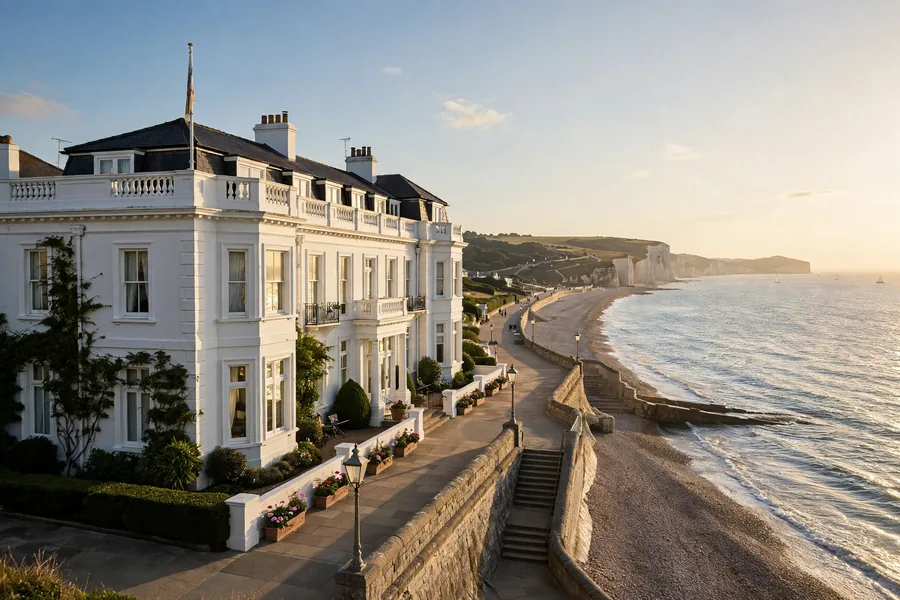

Choosing where to stay can make or break an island holiday, and Isle of Wight hotels offer a wider range than many first-time visitors expect: grand Victorian seafront properties, small family-run guest houses, boutique inns above pubs and modern aparthotels. The island is compact, but its towns have very different characters, so the best choice depends on how you plan to spend your days. This guide explains how to match the hotel to the trip, and what to check before you book.
Why Your Base Matters on the Isle of Wight
Nowhere on the island is much more than an hour from anywhere else, yet your base still shapes the holiday. Stay on the coast and your mornings start with sea air and an easy walk to the beach. Stay inland and you get quieter nights, village pubs and dark skies. Most visitors arrive by ferry with a car, and crossing times influence check-in more than people expect, so it is worth reading our Isle of Wight ferry guide before fixing your arrival plans.
Think about your evenings as much as your days. Seaside resorts such as Sandown, Shanklin and Ryde have the widest choice of restaurants and entertainment within walking distance, which matters if you prefer to leave the car parked. Smaller villages offer charm and calm, but dinner options may mean a drive or an early sitting at the village inn.
Seaside Towns vs Countryside Stays
The east coast resorts are the classic choice. Sandown and Shanklin share a long sandy bay, traditional promenades and plenty of family attractions, and Shanklin’s old village adds thatched pubs and tearooms. Ryde, where many ferries and the hovercraft arrive, has the island’s longest pier, a big sandy beach at low tide and good transport links for car-free visitors.
In the west, Freshwater and Totland sit close to the Needles and some of the island’s finest walking country, while Yarmouth is a small harbour town with a castle, good restaurants and a ferry to Lymington. Ventnor, on the south coast, has a mild microclimate, a botanic garden and a more bohemian feel. Inland options around Newport and the villages of the central downs suit walkers and cyclists who want the island’s paths on the doorstep: if walking is the point of the trip, our guide to walking on the Isle of Wight will help you pick a base near the best routes.
Isle of Wight Hotels for Families, Couples and Dog Owners
Families should look for family rooms or interconnecting rooms, early dinner sittings and, ideally, a pool or games room for wet-weather days. The larger seafront hotels in Sandown and Shanklin often include entertainment and are set up for children, while smaller guest houses may have minimum-age policies, so always check before booking. Cots, high chairs and bottle-warming facilities are commonly available but rarely listed in detail online, so a quick phone call is worthwhile.
Couples after a quieter break tend to prefer the boutique end of the market: smaller hotels in Ventnor, Bonchurch and Yarmouth, often with sea-view rooms, good restaurants and adult-focused spas. Dog owners are well served too, as many Isle of Wight hotels now welcome dogs for a small nightly fee, with the island’s beaches and downs making it an easy place to holiday with a pet. Confirm the dog policy in writing, including whether dogs can join you in the bar or restaurant.
Parking, Ferries and Getting Around
Parking is the detail most likely to catch visitors out. Some seafront hotels have small car parks that cannot be reserved, and street parking in the resorts fills quickly in August. If you are driving, ask the hotel directly about parking before you book, and consider hotels that offer discounted ferry travel: many island properties can book your crossing at a reduced rate when you stay with them, which can save a meaningful sum in peak season.
Car-free visitors should base themselves in Ryde, Newport or Shanklin, where buses and the island’s small railway line connect the main towns. Drivers will find the island easy to navigate, and planning your routes with the phone tools in our guide to the best apps for drivers makes finding car parks and fuel straightforward. If your car needs attention while you are here, our overview of auto services on the Isle of Wight explains the local options.
What to Check Before You Book
Before you confirm any of the Isle of Wight hotels on your shortlist, check five things. First, breakfast: whether it is included, what time it runs and whether early sittings are possible on ferry days. Second, the room itself: sea-view rooms command a premium and vary enormously, so ask which floor and whether there is a lift if stairs are a problem. Third, cancellation terms, which differ sharply between the cheapest advance rates and flexible bookings.
Fourth, check recent reviews with an eye for patterns rather than one-off complaints, particularly about noise, water pressure and the quality of the breakfast. Fifth, book directly with the hotel once you have compared prices: island properties frequently match booking-site rates and may add a ferry discount, a room upgrade or a later checkout for direct guests. If you are visiting with a view to a longer stay or even a move, pairing your hotel trip with the practical advice in our guide to moving to the Isle of Wight turns a holiday into useful research.
When to Go: Seasons and Prices
Timing changes both price and experience. July and August bring the warmest seas and the fullest programme of events, but also the highest rates and the busiest ferries, so book island hotels early for summer. May, June and September are often the sweet spot: mild weather, open attractions and noticeably calmer resorts. Winter stays are the cheapest of all and suit walkers and couples who like empty beaches and log fires, although some smaller hotels close between November and February and restaurant hours shrink. Events such as the Isle of Wight Festival in June and Cowes Week in August fill hotels months ahead across the whole island, not just in the host towns, so if your dates touch either, treat booking as urgent.
Making the Most of Your Stay
The best Isle of Wight hotels act as a base camp rather than just a bed. Ask staff where they eat, which beach they use at weekends and which attractions are quietest at opening time; island knowledge is the real luxury in a small property. Plan one anchor activity per day, leave gaps for the weather to change your mind, and remember that the island’s charm is its pace.
Choose the town that fits your trip, check the parking and ferry details before you pay, and book direct when you can. Do that, and your hotel becomes part of the holiday rather than just the place it starts from each morning.