
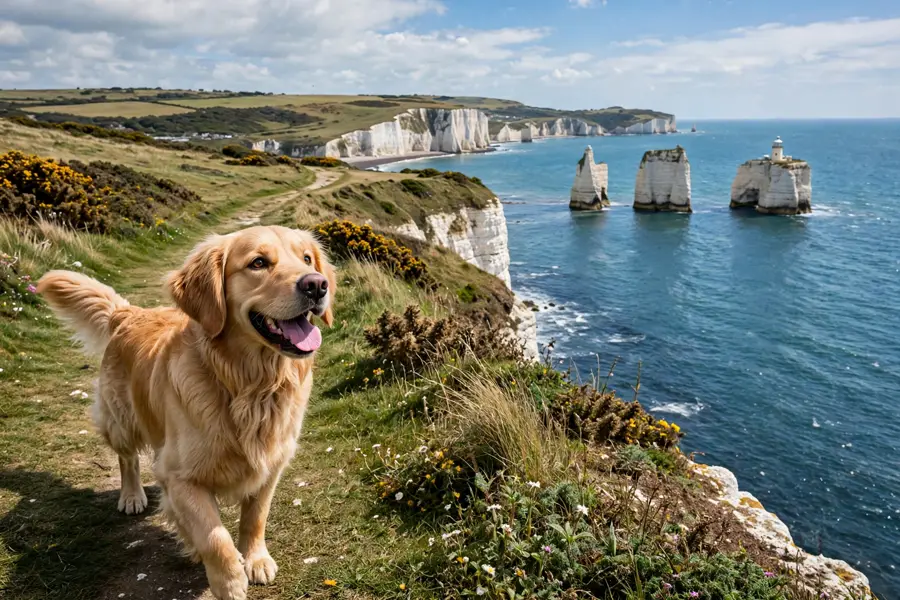

If you are planning a dog friendly Isle of Wight break, you have picked one of the easiest places in Britain to holiday with a dog. The island is small enough to cross in under an hour, yet it packs in cliff paths, woodland trails, quiet bays and villages where the pub keeps a water bowl by the door.
Most attractions here are outdoors. Most beaches are within a short drive of wherever you stay. And because so much of island life happens outside, dogs are not an afterthought. They are simply part of the scenery.
This guide walks through the practical side: the best walks, the beach rules that catch visitors out, the ferry crossing, and where to stay once you arrive.
Why Dogs Settle In So Quickly Here
Space is the big reason. Outside the main resort towns, the island feels rural and unhurried, with far fewer crowds than the mainland coast in peak season.
There is also variety in a small area. A morning can start on a breezy cliff top, move into cool woodland after lunch, and finish on a sandy bay, all without a long drive in between.
For nervous or older dogs, that matters. Short hops between places mean less time in the car and more time actually walking, sniffing and resting.
The Walks Your Dog Will Remember
The coast path is the headline act. It circles the whole island, so you can dip into short sections rather than tackling the full route. The stretch over Tennyson Down, from Freshwater Bay towards the Needles, is the one most visitors talk about afterwards.
It is also the answer to a classic problem. Picture a spaniel who has spent two hours in the car and a ferry crossing on top, wound up and desperate to move. Twenty minutes after parking at Freshwater, that same dog is trotting along open downland with the sea on one side and not a road in sight. Energy spent, holiday rescued.
Inland, the old railway lines are now flat, shaded cycle and walking trails. They suit puppies, older dogs and anyone pushing a buggy alongside. If you want to build walking into every day of the trip, our guide to walking on the Isle of Wight covers routes and routines in more depth.
Beaches, and the Seasonal Rules Worth Knowing
Here is the detail that trips people up. The main resort beaches, including the busiest stretches at Ryde, Sandown, Shanklin and Ventnor, restrict dogs during the summer season, usually from May to September.
Head a little further along the coast and the picture changes. Quieter bays such as Brook, Compton Bay and Appley away from the main strip welcome dogs all year, and they are often the prettier spots anyway.
Rules are set beach by beach and signs change, so check the board at the beach entrance before you unclip the lead. A two minute read saves an awkward conversation with a warden later.
Getting Across the Water
Dogs travel on the ferries from Portsmouth, Southampton and Lymington, and most crossings take well under an hour. Dogs usually ride free or for a small fee, and on the car ferries they can simply stay in the vehicle if that is where they are calmest.
Our Isle of Wight ferry guide explains the routes, ports and booking choices in full. Book the crossing first, then plan the first walk of the trip for about an hour after you dock. It gives everyone a breather.
Once you are driving the coast roads with a dog in the back, the island’s salt air and sea spray are worth a thought for the car too. Our guide to auto care for coastal living explains what the seaside does to paintwork and brakes over time.
Where to Stay With a Dog
The island has plenty of dog friendly cottages, farm stays and small hotels, especially outside the biggest resorts. When you book, ask three questions: is there an enclosed garden, are dogs allowed in the bar or breakfast room, and is there a hose or tap for muddy paws?
Those small details decide whether a stay feels easy or awkward. Our roundup of Isle of Wight hotels explains how to choose where to stay on the island, and many listed areas have dog friendly options nearby.
Travelling by car gives you the most freedom with a dog. If you are mixing driving and walking days, the notes on hybrid cars and island travel show how other visitors plan their routes.
Small Things That Make a Big Difference
A few habits will make the trip smoother for you, your dog and everyone you meet:
- Carry water on every walk. Cliff paths have no taps, and dogs overheat quietly on still, sunny days.
- Keep the lead on near cliff edges and around livestock. Sheep graze much of the downland, and the cliffs are unforgiving.
- Check for ticks after woodland walks, especially in spring and autumn.
- Bag it and bin it, even on quiet paths. The island stays dog friendly because owners leave it clean.
- Plan one quiet day in the middle of the trip. New places, new smells and long walks add up, and most dogs need a slower day to recharge.
A Simple Plan for Your First Two Days
Day one works best kept short. Cross in the morning, walk a gentle section of coast path near your base, and let the dog learn the new smells at its own pace. A big pub lunch, a short evening stroll and an early night suit almost every dog after a travel day.
Save the headline walk for day two, once you know how your dog is coping with the heat, the hills and the excitement. Start early, take the cliff path before the sun is strong, and finish at a dog friendly cafe or pub garden.
By day three you will have a rhythm: a long walk in the morning, a lazy middle of the day, and a beach at low tide in the evening. Most owners we hear from say the island feels like it was designed around exactly that pattern.
One Last Thing Before You Book
A dog friendly Isle of Wight trip does not need much planning, just the right order. Ferry first, a walk soon after landing, a base with an enclosed garden, and one eye on the beach signs.
Get those four things right and the island does the rest. If the trip turns into something longer, our guide to moving to the Isle of Wight is the natural next read, because plenty of dog owners arrive for a week and start browsing cottages by day three.