
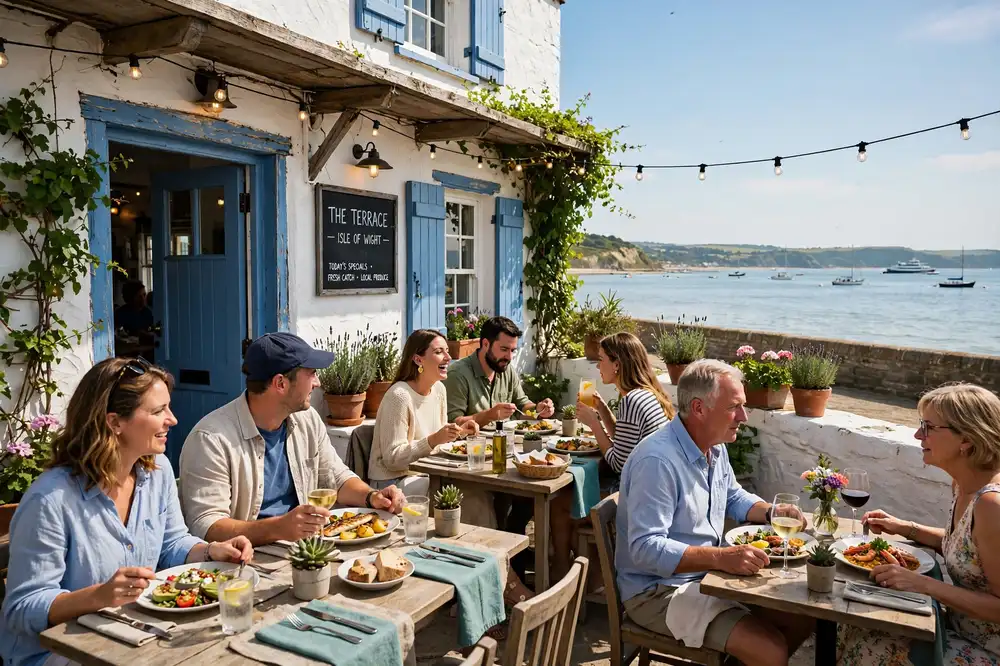

The Isle of Wight rewards hungry visitors. This small island packs in harbourside fish shacks, cosy village pubs, cream tea rooms and a handful of genuinely special restaurants. The trick is knowing where to look before you arrive, because the best tables fill up fast in summer.
This guide covers Isle of Wight restaurants worth booking, from casual crab sandwiches to proper celebration dinners. It also explains how to plan around island opening hours, which catch visitors out more than anything else.
Start With the Harbourside Towns
Most of the island’s best eating sits within a short walk of the water. Cowes, Yarmouth, Ventnor and Bembridge each have their own character, and each suits a different kind of meal.
Cowes is the liveliest choice. The marina brings a steady crowd, so restaurants here stay open later and book up earliest. If you want a table on a Friday or Saturday in July, book at least a week ahead. A walk along the parade before dinner is a good way to work up an appetite, and the town has plenty of pubs for a drink afterwards.
Yarmouth suits a slower evening. The harbour is smaller and quieter, and the restaurants lean towards fresh fish and simple cooking. It is a good pick for a first night on the island, when you want good food without a long drive. Ventnor, on the south coast, has a slightly bohemian feel, with cafes and small restaurants tucked into steep streets above the beach.
Bembridge works well for lunch. The village has a deli, a couple of cafes and a harbour pub, and it sits close to some of the island’s best coastal walks. Plan lunch here, then walk it off along the beach.
What to Eat on the Island
Seafood leads the menu on the Isle of Wight, and rightly so. Crab, lobster, sea bass and locally caught fish appear on menus across the island. If you see crab on the menu, order it. Island crab is sweet and generous, and it is often the best value dish on the board.
Local produce runs a close second. The island grows excellent tomatoes, garlic, asparagus and soft fruit, and many kitchens build their menus around what is in season. A salad in June tastes completely different from the same dish in November, and the best restaurants make that obvious.
Cream teas deserve a mention of their own. The island has plenty of tea rooms, and a proper cream tea makes a perfect mid-afternoon stop on a walking day. Ask for the local jam. It is usually made within a few miles of where you are sitting.
Booking Ahead Really Matters
Island restaurants are small. A dining room with 12 tables cannot absorb a sudden rush, and summer weekends bring exactly that. Booking ahead is not fussy. It is the difference between a good evening and a long drive home hungry.
Call the restaurant directly if you can. Online booking works, but a quick call also tells you about the daily specials and whether the kitchen can handle a dietary requirement. Many island kitchens are happy to adapt a dish if they know in advance.
Arrive on time. A table held for 15 minutes in a small restaurant is a table another party wanted. If your plans change, ring ahead and let them know. Island hospitality runs on goodwill, and it is noticed.
Eating Well on a Budget
Good food on the island does not have to mean a big bill. Lunch menus are often much cheaper than dinner at the same restaurant, and many places offer a set lunch that covers two courses for the price of one evening main.
Fish and chip shops are a genuine island strength. A portion eaten on the harbour wall costs a fraction of a restaurant meal and often tastes just as good. Look for the queue of locals. That is the review that matters.
Farm shops and delis are worth a stop too. Pick up bread, cheese, fruit and something sweet, then eat on the beach. It is one of the best meals the island offers, and it costs very little. If you are staying for a week, a deli run on your first day sets up several cheap lunches.
Planning Your Trip Around Food
Food plans shape the rest of your trip more than most visitors expect. A dinner booking in Cowes means an evening in Cowes, so plan your day around it. The same goes for lunch in Bembridge or tea in Ventnor.
Think about how you will get there. Island roads are narrow and winding, and parking in harbour towns gets tight in summer. If you are staying somewhere central, a bus or taxi can be easier than driving. Our Isle of Wight ferry guide explains how to arrive with a car, and our guide to car service plans for island drivers helps if you are bringing your own vehicle for the week.
Where you stay matters too. A hotel near the harbour puts restaurants within walking distance, which makes evenings much simpler. Our guide to Isle of Wight hotels compares the main options, and our practical guide for homebuyers covers the island in more depth for anyone thinking of a longer stay.
Family Meals and Dietary Needs
Families eat well on the island. Most restaurants welcome children, and many offer smaller portions or a simple children’s menu. The best family meals are often the simplest ones: fish and chips on the beach, a pub lunch, or a cream tea after a walk.
Our dog friendly guide lists walks, beaches and stays that welcome dogs, and several of the restaurants in this guide have outdoor tables where dogs are welcome too. Ask when you book.
Vegetarian and gluten-free diners are well served. Island kitchens are used to these requests, but telling them when you book makes the meal smoother. A restaurant that knows in advance can usually offer more than a single adapted dish.
A Simple One-Day Food Plan
Here is a relaxed plan that works for a first visit. Start with breakfast at your hotel or a cafe near the harbour. Walk the coast in the morning, then stop for lunch in Bembridge or Yarmouth. Spend the afternoon on the beach or visiting a village, then finish with a booked dinner in Cowes or Ventnor.
Our walking guide has routes that fit neatly between meals, so you can plan a walk that ends at a good lunch spot. That is the island at its best: a walk, a meal, and a view.
Booking the Table You Actually Want
The Isle of Wight rewards visitors who plan their eating as carefully as their sightseeing. Book the good tables early, eat seafood when it is in season, and leave room in the day for a slow lunch. The island’s restaurants are small, personal and proud of what they serve, and a little planning is all it takes to enjoy them properly.