
Beauty statistics UK data can reveal much more than how much consumers spend on cosmetics. Industry figures can help explain changing purchasing habits, skincare preferences, makeup demand, retail behaviour and the broader development of the UK beauty sector. For businesses, professionals and consumers, understanding reliable beauty data provides useful context for the trends shaping the market.
The UK beauty industry covers a wide range of products and services, including skincare, makeup, haircare, fragrance, personal care and professional treatments. Because the sector is so broad, statistics need to be interpreted carefully. Different reports can measure different parts of the market, use different definitions and cover different periods.
That is why the most useful approach is not to focus on one headline number. Instead, beauty statistics should be viewed as pieces of a larger picture showing how consumers, brands and beauty professionals are changing.
Why Beauty Statistics UK Data Matters
Beauty statistics UK research can help identify changes that are difficult to see from individual products or social media trends alone. A product may become viral online, for example, but market data can help indicate whether that attention translates into wider consumer demand.
Statistics can also help businesses understand which categories are growing, how consumers shop and what factors influence purchasing decisions. For consumers, industry data provides a broader perspective on the products and services that are becoming popular.
However, statistics should always be considered alongside methodology. A report covering skincare sales cannot automatically be used to describe the entire UK beauty industry, just as a survey of a specific group cannot necessarily represent every beauty consumer in Britain.
Understanding the UK Beauty Industry
The UK beauty industry is made up of many interconnected sectors. Traditional cosmetics sit alongside skincare, professional services, wellness-related products, fragrance and beauty technology.
Retail is also changing. Consumers can purchase beauty products through department stores, supermarkets, pharmacies, specialist retailers, independent shops and online platforms. This variety makes the UK market particularly dynamic.
The professional side of the industry is equally diverse. Salons, independent practitioners, beauty clinics, freelance professionals and larger chains all contribute to the wider ecosystem.
For a broader cultural perspective, British beauty culture explores how these commercial developments connect with traditions, lifestyles and changing attitudes towards personal appearance.
Beauty Industry Facts That Put the Market in Context
Beauty industry facts are most useful when they answer a specific question. Instead of asking simply how large the industry is, businesses and researchers may examine the performance of individual categories, changes in consumer behaviour or the relationship between online discovery and physical retail.
One important development is the increasing importance of digital discovery. Consumers can research ingredients, watch tutorials, compare reviews and discover products through social media before making a purchase.
This has changed the traditional relationship between advertising and buying decisions. A consumer may encounter a product through a creator, research it independently and then purchase it through a retailer several days later.
As a result, modern beauty businesses increasingly need to understand the entire customer journey rather than focusing only on the final transaction.
Skincare Statistics and Changing Consumer Priorities
Skincare statistics can provide valuable insight into one of the most important areas of modern beauty. Consumers increasingly discuss routines, ingredients, product formulations and skin concerns alongside traditional cosmetic purchases.
Skincare has also become closely connected to education. People can now find extensive information about cleansers, moisturisers, exfoliating products, cosmetic ingredients and professional treatments through websites, social platforms and retailers.
Yet greater access to information does not always mean better information. Online beauty claims can range from well-supported explanations to highly simplified marketing messages.
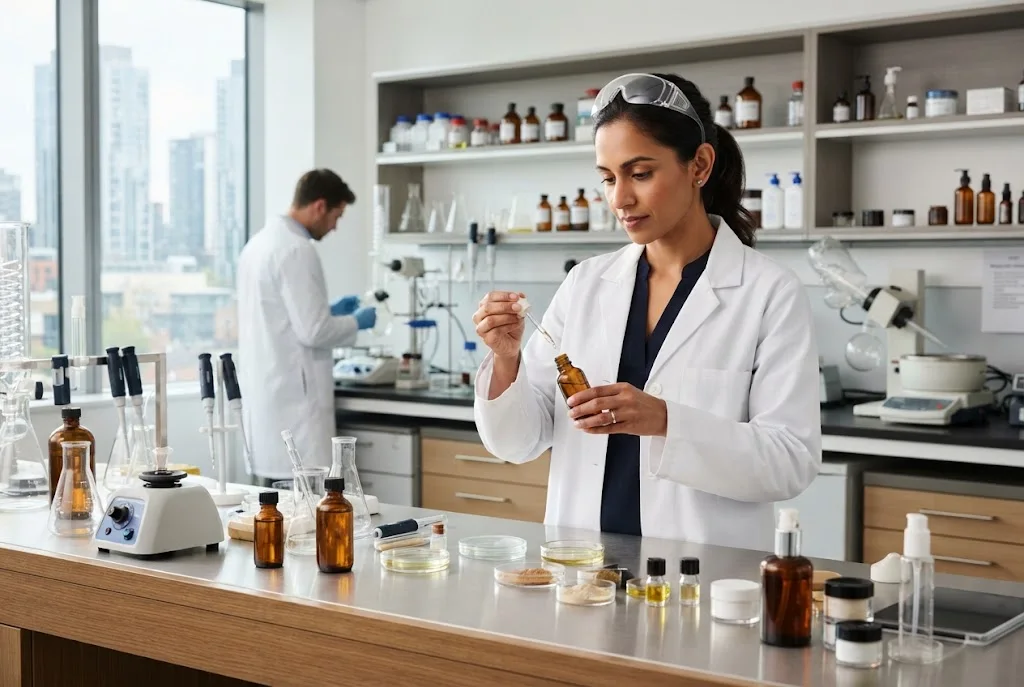
This is where beauty research becomes particularly relevant. Scientific evidence can help consumers understand what is known about ingredients and formulations rather than relying solely on popularity or anecdotal experiences.
Makeup Statistics and Changing Beauty Habits
Makeup statistics can help explain how cosmetic routines are changing. The Makeup remains an important category, but the way people use it is becoming increasingly flexible.
Some consumers may favour lightweight products and subtle finishes for everyday wear, while others use makeup as a form of creativity and self-expression. Social media has made it easier for consumers to discover techniques ranging from minimalist application to highly detailed editorial styles.
Product launches can also influence the category. New shades, textures, packaging concepts and multifunctional products provide consumers with frequent opportunities to experiment.
However, a rise in social visibility does not necessarily mean that a trend will have lasting commercial impact. Long-term sales data can provide a very different picture from a short period of viral attention.
Beauty Consumer Statistics: What Influences Purchasing?
Beauty consumer statistics can reveal the factors that influence buying decisions. Price, product performance, convenience, brand reputation, ingredients, reviews and recommendations can all play a role.
Different consumers naturally place different levels of importance on these factors. Someone purchasing an everyday cleanser may prioritise affordability and convenience, while another consumer buying a premium treatment product may place greater emphasis on formulation, professional advice or brand reputation.
Age, lifestyle and shopping habits can also influence preferences. This means businesses should be cautious about treating the UK beauty consumer as one uniform group.
Segmentation can provide a more useful picture. Understanding different consumer groups allows brands to create more relevant products, content and shopping experiences without assuming that every customer wants the same thing.
Beauty Market Statistics and Online Shopping
Beauty market statistics increasingly need to account for the relationship between physical and digital retail. Online shopping has made it easier for consumers to compare products and access brands that may not be available locally.
Physical retail still has advantages, particularly for products where shoppers want to test shades, textures or fragrances. Department stores, specialist retailers and independent shops can also provide personal assistance that is difficult to replicate online.
Rather than viewing online and offline retail as completely separate, the modern beauty journey often combines both. A customer may discover a product online, inspect it in-store and later purchase it through an online retailer.
This behaviour makes omnichannel experiences increasingly important for beauty businesses.
Social Media and UK Beauty Data
Social media has become one of the most influential forces in modern beauty discovery. TikTok, Instagram, YouTube and other platforms allow products and techniques to gain attention rapidly.
Viral beauty content can influence searches, product demand and conversations around ingredients. However, social media metrics should not be treated as equivalent to traditional market statistics.
A video can receive substantial attention without generating corresponding purchases. Likewise, a product with modest social visibility may perform strongly through established retail channels.
The difference between attention and commercial demand is therefore important when interpreting beauty data.
Beauty Facts and the Problem of Viral Claims
Beauty facts are frequently shared online, but not every statement presented as a fact has been properly established. Short-form content encourages simple explanations, while cosmetic science can be considerably more nuanced.
Consumers should be particularly careful with dramatic claims involving guaranteed results, instant transformations or universal benefits.
Research can provide useful evidence, but even scientific findings need context. The formulation tested, population studied, length of the investigation and outcome measured can all affect what conclusions are reasonable.
A responsible approach is therefore to ask where a beauty claim comes from and whether the evidence actually supports the specific statement being made.
How Beauty Statistics Relate to Beauty Trends UK
Beauty statistics and trends are closely connected, but they are not the same thing. A trend describes a noticeable change in behaviour, interest or style, while statistics can help measure the scale or persistence of that change.
For example, social media may identify growing interest in a particular skincare ingredient. Search behaviour, retail data or consumer surveys may then provide additional evidence about whether that interest is spreading more widely.
This distinction is useful when analysing beauty trends UK. A viral trend may be important culturally without becoming a major long-term market category.
Conversely, a gradual shift in consumer behaviour may receive little attention online while having a meaningful commercial effect.
The Role of London in UK Beauty Data
London is an important market for beauty brands and professionals, but statistics focused on the capital should not automatically be interpreted as national data.
The city has a large and diverse consumer population, a strong concentration of beauty businesses and close connections to international brands and trends. These characteristics can make London an early indicator of certain developments.
At the same time, beauty habits vary across Britain. Regional markets, local businesses and different consumer communities contribute to the national picture.
Our guide to London beauty explores the capital’s salons, treatments, shopping environment, events and wider beauty scene in more detail.
Why Definitions Matter When Reading Beauty Statistics UK Reports
One of the easiest ways to misunderstand beauty statistics UK data is to ignore the definition behind the number.
A report may refer to the value of retail sales, the estimated size of a category, consumer spending, professional service revenue or the number of businesses operating in a sector. These measures answer different questions.
The same applies to geographical coverage. Some reports may focus specifically on Great Britain, others on the United Kingdom, while individual studies may examine particular cities or consumer groups.
Before comparing two figures, check what each one measures. Differences in methodology can make apparently conflicting statistics perfectly reasonable.
How Businesses Can Use UK Beauty Data
Beauty businesses can use reliable data to support decisions about products, marketing, pricing and customer experience.
- Identify categories attracting sustained consumer interest.
- Understand differences between consumer groups.
- Evaluate the relationship between social attention and purchasing.
- Monitor changes in online and physical retail behaviour.
- Identify opportunities for new products or services.
- Use customer research to improve communication and positioning.
- Compare short-term trends with longer-term market developments.
Data should support decision-making rather than replace professional judgement. Businesses still need to understand their customers directly and consider factors that may not appear in broad industry statistics.
How Consumers Can Use Beauty Statistics
Consumers can also benefit from understanding beauty data. Statistics can reveal whether a category is growing, how purchasing habits are changing and which products are receiving wider attention.
However, market popularity should never be treated as proof that a product is personally suitable. A widely purchased skincare product may still be inappropriate for an individual’s needs, just as a less popular product may be a good fit.
Consumers should therefore combine market information with product research, ingredient information and, where appropriate, professional advice.
The Future of UK Beauty Data
Beauty data is likely to become increasingly detailed as shopping moves between physical stores, websites and social platforms. Businesses can collect information from multiple stages of the customer journey, while consumers have more opportunities to compare products than ever before.
Artificial intelligence and personalisation may also influence how beauty recommendations are delivered. These developments could make product discovery more targeted, although consumers will still benefit from transparency about how recommendations are generated.
Meanwhile, sustainability, inclusivity and responsible consumption are likely to remain important areas for market research. Consumers are increasingly interested not only in what a product does, but also in how it is produced, marketed and positioned.
What Beauty Statistics Cannot Tell You
Statistics are powerful, but they have limits. A market report cannot tell an individual exactly which skincare routine they should use. A consumer survey cannot guarantee how a product will perform for every person. A sales increase does not automatically prove that a particular product is better than its competitors.
Data is most useful when combined with context. Research methods, consumer needs, product characteristics and cultural influences all help explain the numbers.
This is particularly important in beauty because personal experience is such a significant part of the category. Two people can purchase the same product and have very different experiences.
Final Thoughts on Beauty Statistics UK
Beauty statistics UK data provides an important foundation for understanding the country’s evolving beauty market. Industry facts, consumer research, skincare data, makeup trends and retail behaviour can all reveal different aspects of how the sector is changing.
The key is to interpret statistics carefully rather than relying on isolated headline figures. Definitions, methodology, time periods and sample groups all influence what a number actually means.
For consumers, better understanding of beauty data can encourage more thoughtful purchasing decisions. For businesses, reliable statistics can support smarter product development, marketing and customer strategy.
Ultimately, the most useful beauty data does not simply tell us what is popular. It helps explain why consumer behaviour is changing and what those changes could mean for the future of beauty in the UK.